
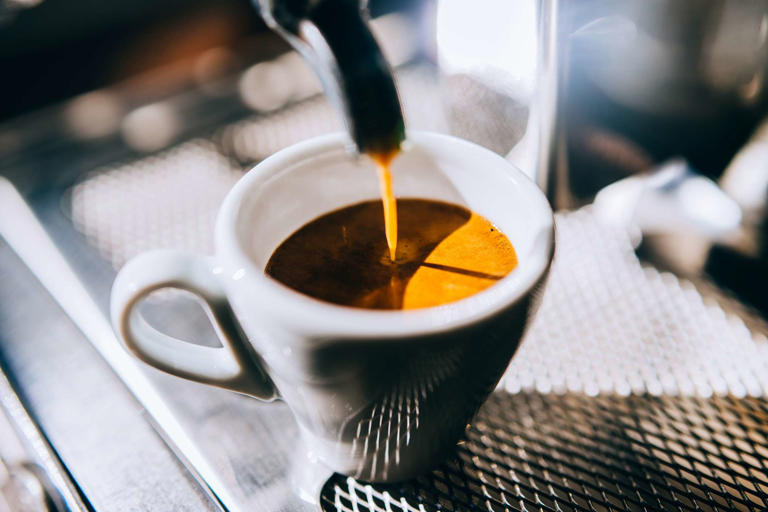
It’s 6:30 a.m. in Seattle, and the city smells like coffee.
Not just any coffee — that rich, bold aroma that seeps into your soul and says, “You’ve got this.”
If you’re anything like most Americans, that first sip of coffee isn’t just about caffeine — it’s a daily ritual, a comforting friend, and sometimes, a lifeline.
From the bustling cafes of New York to the quiet porches of Montana, coffee connects us all.
But here’s the question that keeps health-conscious drinkers awake (even without caffeine):
Is coffee actually healthy — and if so, which kind is best?
I’m a registered dietitian, but before that, I was a barista during my college years. I learned two things during that time:
-
People will defend their coffee choice like it’s religion.
-
Not all cups are created equal.
Some coffees are nutritional powerhouses — rich in antioxidants, brain-boosting compounds, and anti-inflammatory benefits. Others? Loaded with sugar, syrups, and artificial creamers that can turn your “morning energy” into a long-term health drain.
So today, we’re going to dive deep — from espresso shots to cold brews — and rank the 7 healthiest types of coffee you can enjoy guilt-free.
And don’t worry — this isn’t one of those “quit caffeine forever” lectures.
You can have your brew and your health, too.
1. Black Coffee — The Gold Standard of Pure Energy
If coffee were a person, black coffee would be the rugged minimalist — no frills, no sugar, no nonsense.
Just pure roasted beans and hot water.
When I start my mornings, I often reach for a small cup of black coffee. Why? Because it’s virtually calorie-free, rich in antioxidants, and boosts metabolism naturally.
The beauty of black coffee lies in its simplicity. No cream, no sweeteners — just you and the bean.
It’s especially high in polyphenols, compounds that help fight oxidative stress and reduce inflammation.
In fact, many of my clients who switch from sweetened lattes to black coffee report noticeable changes within weeks — better energy, fewer sugar crashes, and improved digestion.
But let’s be honest: it’s an acquired taste.
When I first tried it, it felt harsh — bitter, even punishing. But after a week, I noticed something strange: my taste buds started to appreciate the subtle notes — chocolatey, nutty, floral, smoky.
It’s like learning to enjoy dark chocolate after years of candy bars. Once you adapt, you’ll never go back.
Pro Tip for Americans transitioning to black coffee:
Start with medium roasts — they’re smoother and less acidic. Gradually reduce your sugar and milk until your tongue adjusts to the real flavor of coffee.
✅ Health Highlights:
-
0 calories, 0 sugar
-
Boosts metabolism and fat oxidation
-
Rich in antioxidants
-
Improves brain alertness and mood
2. Cold Brew — Smooth Energy Without the Crash
Now let’s talk about a modern American favorite — cold brew.
It’s the drink that took over cafes across Los Angeles, Austin, and Miami.
Cold brew isn’t iced coffee. It’s brewed cold, steeped for 12–24 hours in chilled water. This process creates a smoother, less acidic flavor — ideal for people with sensitive stomachs.
As a dietitian, I love cold brew because it offers a slower caffeine release. You get sustained energy without that jittery spike that regular drip coffee sometimes causes.
And here’s the secret benefit: since it’s naturally sweeter and less bitter, people tend to add less sugar and cream, making it a healthier choice overall.
I remember visiting a café in Portland where the barista poured cold brew from a tap — like a craft beer. The aroma was chocolatey, mellow, almost creamy. I drank it black, over ice, and it felt like waking up slowly and beautifully.
Cold brew is also higher in antioxidants than hot coffee, thanks to the slow extraction process that preserves chlorogenic acids — compounds linked to reduced inflammation and better blood sugar balance.
✅ Health Highlights:
-
Lower acidity (gentle on the stomach)
-
Smooth caffeine release
-
Naturally sweet flavor — fewer additives needed
-
High in antioxidants
3. Espresso — Small Cup, Big Benefits
Ah, espresso — the heartbeat of every Italian café and American coffeehouse.
In one tiny shot lies concentrated power. Espresso is made by forcing hot water through finely ground coffee beans under high pressure, resulting in a strong, bold brew rich in crema and character.
While it’s often seen as a quick energy jolt, espresso is actually one of the healthiest ways to drink coffee.
Why? Because you consume less volume, fewer calories, and a potent dose of antioxidants in each sip.
I remember my trip to San Francisco, standing in line at a small Italian café. A man beside me said, “Espresso is meditation in a cup — quick, pure, honest.” I smiled. He wasn’t wrong.
Espresso contains compounds like cafestol and kahweol, which may support liver health and protect against oxidative stress. It’s also great before a workout — boosting endurance and fat metabolism.
The key, however, is moderation. Two to three shots per day? Great. Six? You’ll be vibrating through your meetings.
✅ Health Highlights:
-
Antioxidant-rich and concentrated
-
Low calorie
-
Great pre-workout drink
-
Supports focus and fat metabolism
4. Americano — The Balanced Brew
If espresso is too strong for you but black coffee feels too weak, the Americano is your perfect middle ground.
It’s made by diluting espresso with hot water — resulting in a smooth, balanced flavor that’s still full-bodied but less intense.
The Americano has an almost patriotic origin story. During World War II, American soldiers in Italy would add water to espresso because it was too strong for their taste — hence, the name “Caffè Americano.”
Nutritionally, it’s a gem. You get the antioxidant density of espresso with the hydration of hot water, all without any sugar or cream.
I often recommend Americanos to clients transitioning away from sugary lattes. It still feels “café fancy,” but it’s infinitely better for your blood sugar and waistline.
Plus, it’s easy to customize — add cinnamon, a splash of oat milk, or a drop of vanilla extract for natural sweetness.
✅ Health Highlights:
-
Hydrating, low calorie
-
Great for easing off milk-based drinks
-
Retains espresso’s antioxidant punch
-
Supports heart and brain health
5. Cappuccino — The Smart Indulgence
Let’s be honest — not everyone wants black coffee. Sometimes, you want something cozy, creamy, and comforting. Enter: the cappuccino.
A true cappuccino — one-third espresso, one-third steamed milk, one-third foam — is a beautifully balanced drink.
When made right (and without added sugar or flavored syrups), it can actually fit into a healthy diet.
The milk provides protein and calcium, the espresso adds antioxidants and mental focus, and the foam gives that luxurious mouthfeel without extra calories.
I have a client in Chicago who loves her morning cappuccino ritual. She told me, “It’s not just coffee — it’s therapy.” I couldn’t agree more.
Just make sure to choose quality milk (organic, or unsweetened oat/almond if dairy isn’t your thing) and skip the whipped cream or caramel drizzle.
✅ Health Highlights:
-
Provides calcium and protein
-
Balanced caffeine content
-
Can be made low-calorie with clean ingredients
-
Encourages mindful sipping rather than gulping caffeine
6. Bulletproof Coffee — The Trend That Actually Works (For Some)
A few years ago, Silicon Valley made “Bulletproof Coffee” famous — coffee blended with grass-fed butter and MCT oil.
It sounded insane at first. Coffee… with butter?
But here’s the surprising thing — it actually makes nutritional sense for certain lifestyles, especially low-carb or ketogenic diets.
The healthy fats from butter and MCT oil provide long-lasting energy, stabilize blood sugar, and curb hunger for hours.
I’ve had clients who swear by it for focus and fat loss — especially those who skip breakfast.
However, it’s not for everyone. If you’re not used to high-fat intake, it can upset your stomach. And if you’re trying to lose weight, the calories (often 200–300 per cup) can add up fast.
When I tried it for the first time, I blended it carefully and took a sip. It was creamy, rich, like a latte on steroids. I didn’t get hungry until late afternoon — and my brain felt laser-sharp.
✅ Health Highlights:
-
Great for keto or intermittent fasting
-
Boosts satiety and focus
-
Supports sustained energy
-
Must be consumed in moderation due to high calorie count
7. Decaf Coffee — The Unsung Hero
Let’s give a round of applause for decaf — the most misunderstood member of the coffee family.
Many Americans think decaf is “fake coffee,” but that couldn’t be further from the truth.
Decaf still contains antioxidants, polyphenols, and all the flavor — minus most of the caffeine.
For people sensitive to caffeine, pregnant women, or those dealing with anxiety or sleep issues, decaf can be a true savior.
The key is choosing a high-quality, Swiss-water-processed decaf — a chemical-free method that removes caffeine naturally while keeping nutrients intact.
One of my clients in Texas used to suffer from heart palpitations after drinking coffee. Switching to decaf gave her back her morning ritual without the anxiety.
✅ Health Highlights:
-
Ideal for caffeine-sensitive individuals
-
Same antioxidants as regular coffee
-
Great for evening enjoyment
-
Promotes calm without sacrifice
☕ The Ranking — From Healthiest to Least
Here’s how I’d rank the 7 healthiest coffees from a dietitian’s lens:
-
Black Coffee — Pure, zero additives, antioxidant-rich
-
Cold Brew — Smooth, low-acid, sustained energy
-
Espresso — Concentrated benefits, minimal calories
-
Americano — Balanced, hydrating, versatile
-
Cappuccino — Smart indulgence with nutrients
-
Bulletproof Coffee — Great for keto, but high-calorie
-
Decaf Coffee — Gentle and underrated
Remember, the healthiest coffee isn’t just about the type — it’s about how you drink it.
Skip the sugar bombs, artificial creamers, and whipped toppings that turn your cup into a dessert.
Coffee and Health: What Americans Should Know
The good news? Coffee isn’t the villain it was once made out to be.
Recent studies show that moderate coffee drinkers (2–4 cups a day) tend to have better cognitive function, lower risk of type 2 diabetes, and improved heart health.
But — and it’s a big “but” — only if you drink it clean.
No sugary syrups, no caramel drizzle, no chemical creamers.
When you keep coffee pure, it becomes one of the most beneficial daily habits you can have.
As a dietitian, I often tell my American clients:
“Your coffee can either fuel your health or sabotage it. The choice is in your cup.”
FAQs — Your Coffee Questions Answered
Q1: Is coffee really healthy, or is that just hype?
Coffee is rich in antioxidants, can improve brain function, and supports metabolism — but only when consumed without sugar overloads or ultra-processed creamers.
Q2: How much coffee is too much?
For most adults, up to 400 mg of caffeine per day (around 3–4 cups) is considered safe. Pregnant women should limit it to about 200 mg.
Q3: What’s the healthiest way to sweeten coffee?
Use natural options like cinnamon, vanilla extract, or stevia. Skip artificial sweeteners and refined sugar.
Q4: Does coffee dehydrate you?
Not really. While it has a mild diuretic effect, the water content in your coffee actually offsets it. Coffee can count toward your daily hydration.
Q5: Is cold brew healthier than hot coffee?
Cold brew tends to be lower in acidity and smoother, which is great for digestion, but both offer similar antioxidant benefits.
Q6: What’s the best time of day to drink coffee?
Late morning — between 9:30 and 11:30 a.m. — is ideal. Your cortisol (stress hormone) levels naturally dip then, so caffeine gives you a balanced boost.
Q7: Can I drink coffee while intermittent fasting?
Absolutely. Black coffee, Americano, or plain cold brew won’t break your fast — just avoid creamers or sweeteners.
☕ Final Thoughts — Brewing Health, One Cup at a Time
As I sit at my kitchen table, the sun rising over my mug, I realize coffee isn’t just about caffeine.
It’s about connection, comfort, and consciousness.
Every brew tells a story — from the farmer who picked the beans to the barista who crafted your cup.
And now, it’s also about you — choosing your health without giving up your ritual.
Whether you’re sipping a smooth cold brew in California, an Americano in Boston, or a creamy cappuccino in Chicago — remember:
It’s not about quitting coffee.
It’s about elevating it.
Drink it pure. Drink it smart.
And let every sip remind you that health can be delicious.