
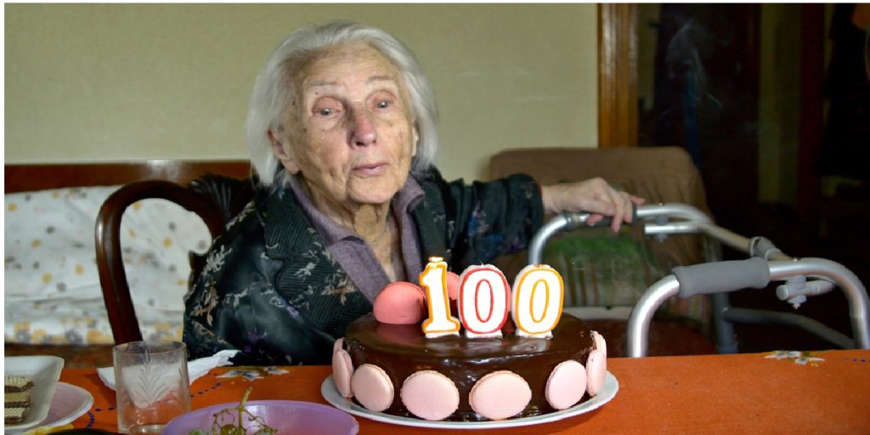
From quiet towns in the U.S. to sunny coastal villages abroad, scientists have uncovered surprising traits shared by those who reach life’s triple digits. But what they found might change how you think about longevity — and happiness.
It started with a laugh.
When Eleanor Jacobs, a 102-year-old retired teacher from Vermont, was asked about the secret to her long life, she didn’t talk about diet or exercise.
She just smiled and said,
“Honey, I never took life too seriously. Except my coffee — that had to be serious.”
Eleanor’s story isn’t unique. Across America — and around the world — people who live past 100 often give similar, simple answers. They don’t credit magic pills, elite workouts, or green juice cleanses.
Instead, they credit attitude, community, small joys, and purpose.
And now, science is catching up to what centenarians have quietly known for decades.
🔬 The Study That Sparked Curiosity
Over the past decade, scientists have been studying what centenarians — especially those living in “longevity hotspots” — have in common. From the rolling hills of Okinawa to the mountain villages of Italy, and even quiet American towns like Loma Linda, California, researchers have looked for patterns that connect these long lives.
Their findings?
It’s not just about genes — it’s about habits, mindset, and connection.
“Living to 100 isn’t luck,” one researcher explained. “It’s a lifetime of small decisions that add up.”
So what do these people have in common? Let’s step into their stories and uncover the traits that just might help us all live longer — and better.
🫶 1. They Stay Connected — Deeply and Consistently
Eleanor, at 102, still hosts a weekly Sunday tea at her home. Her friends — some in their 80s, a few in their 90s — gather for laughter, cookies, and gossip.
She says,
“If you stop laughing, you stop living.”
Scientists agree.
Strong social ties are one of the most consistent predictors of longevity. People who maintain friendships, community ties, and a sense of belonging have lower rates of heart disease, dementia, and depression.
In America’s fast-paced, individualistic culture, this message feels radical — but it’s also freeing.
It’s not about having hundreds of friends online.
It’s about having a few people who truly matter — and staying close to them.
🌿 2. They Eat Simple, Real Food (Not “Diets”)
When researchers asked centenarians about their eating habits, none mentioned calorie counting or cutting carbs. Instead, they described meals centered on real, whole foods:
-
Vegetables grown in their own gardens
-
Beans, grains, and greens
-
Occasional meat or fish
-
Fresh fruits
-
And almost always… a glass of wine or cup of tea shared with someone they love
In the U.S., some of the longest-living communities — like the Seventh-day Adventists in Loma Linda, California — emphasize plant-based eating and moderation.
The pattern is clear:
They eat food from the earth, not factories.
Eleanor laughs about it:
“I didn’t know what ‘organic’ was, dear. We just called it food.”
🚶♂️ 3. They Move — But They Don’t “Work Out”
Here’s something surprising:
Most people who reach 100 never set foot in a gym.
They garden, walk to the store, sweep their porches, play with grandchildren, or dance in their kitchens. Movement isn’t an event — it’s a lifestyle.
In rural parts of America, you’ll still see 90-year-olds mowing lawns, tending to tomatoes, or walking to church.
Their secret? They never stopped being active.
A body in motion, it turns out, really does stay in motion.
And it’s not just physical — gentle activity also keeps the mind and spirit alive.
“I don’t lift weights,” says 99-year-old Harold from Kansas. “But I lift grandkids, and that’s better exercise.”
🧠 4. They Keep Their Minds Busy (and Curious)
One of the most fascinating findings from centenarian studies is that mental activity is as crucial as physical.
Long-lived individuals read daily, play cards, paint, garden, or even learn new skills well into their 90s.
It’s not about intelligence — it’s about curiosity.
They don’t stop asking questions. They don’t stop exploring.
Eleanor still reads mystery novels every week.
“Keeps my brain guessing who did it,” she laughs.
Scientists now believe that lifelong learning and engagement — even small things like crosswords or hobbies — protect against cognitive decline.
In other words, boredom is the enemy of longevity.
💗 5. They Have a Strong Sense of Purpose
When scientists asked centenarians what gets them out of bed in the morning, none of them said “habit.”
They said purpose.
Some volunteer. Some take care of family. Some tend to gardens or local communities.
Purpose — known in Japanese as ikigai — gives structure to life. It’s the quiet belief that you still matter, even when the world moves fast around you.
In one U.S. study, older adults with a clear sense of purpose had a 30% lower risk of early death than those who didn’t.
Harold, the Kansas farmer, puts it simply:
“I still plant tomatoes every spring because I like to see something grow. That’s enough reason to wake up smiling.”
🕊️ 6. They Manage Stress Differently
You might think centenarians avoid stress — but they don’t. They’ve simply learned how to let go.
Many grew up through wars, depressions, pandemics, and personal losses. What sets them apart isn’t the absence of hardship — it’s their ability to recover from it.
They practice what psychologists call “emotional resilience.”
They laugh easily, forgive quickly, and focus on what they can control.
They don’t dwell on the past — they learn from it.
“I let the bad stuff roll off,” says Eleanor. “Life’s too short to be mad for a hundred years.”
In an age of constant digital noise and anxiety, this old wisdom feels brand new.
😄 7. They Laugh — A Lot
There’s something magical about the sound of a centenarian’s laugh — it’s deep, unfiltered, and full of life.
Scientists believe that laughter and joy actually have measurable effects on the body: lowering blood pressure, improving immune function, and releasing endorphins.
But beyond biology, laughter builds connection.
Eleanor has a standing rule at her tea parties: no one leaves without sharing one funny story.
“Even if it’s a bad joke,” she says, “we’ll laugh anyway.”
Laughter, it turns out, is more than happiness — it’s medicine.
🛏️ 8. They Sleep — and Rest — Without Guilt
Many centenarians share a surprising common habit: they respect rest.
They sleep consistently, often rise with the sun, and don’t shame themselves for taking naps.
In modern America, rest is often viewed as lazy. But for the longest-living people, it’s strategic — a way to let the body repair, the heart slow, and the mind renew.
They also honor rhythm: they eat, sleep, and wake around the same time each day. That regularity stabilizes everything from digestion to mood to hormones.
“I sleep when I’m tired,” Eleanor says. “Not when my phone tells me to.”
🙏 9. They Believe in Something Bigger — Faith, Spirit, or Gratitude
Not every centenarian is religious, but nearly all express some form of spirituality or gratitude.
It could be prayer, meditation, time in nature, or simply a daily moment of thanks.
This sense of something bigger gives perspective — a reminder that they’re part of something beyond themselves.
Faith communities, especially in the U.S., also provide social structure and emotional support. Churches, community centers, and volunteer groups become lifelines of connection and purpose.
“Every morning,” Harold says, “I thank God for the sunrise. Every night, I thank Him again. Everything in between is bonus time.”
❤️ 10. They Love — Fiercely, Fully, and Without Regret
Love — in all its forms — might be the most powerful longevity booster of all.
Centenarians stay connected to family, cherish pets, and express love often. They say “I love you” without hesitation.
They understand that love is the heartbeat of a long life — not romantic love, necessarily, but deep, consistent affection for others, for life, for small joys.
“I lost my husband at 70,” Eleanor says softly. “But I kept loving — my children, my friends, even the birds outside my window. That’s what keeps you alive. Love has a heartbeat of its own.”
🧬 What About Genetics?
Yes, genes play a role.
About 20–30% of longevity is genetic — meaning some people are simply born with biology that ages more gracefully.
But here’s the good news: the rest is up to you.
Lifestyle, environment, attitude, and daily habits account for the majority of differences in lifespan.
It’s empowering — because it means your future is not just in your DNA. It’s in your choices.
U.S The American Longevity Shift
In the U.S., the average life expectancy is around 77 — but the number of centenarians is rising fast.
From Maine to California, more Americans are hitting 100 than ever before.
Why? Because health awareness, medical advancements, and lifestyle changes — many inspired by global research — are making a real impact.
Communities focused on wellness, such as walking clubs, farmer’s markets, and social groups for retirees, are popping up nationwide.
And perhaps most importantly, Americans are rethinking what it means to age.
Aging isn’t a decline. It’s a long, beautiful evolution — one worth embracing with energy, humor, and gratitude.
☀️ The Real Secret Isn’t Just Living Longer — It’s Living Better
Scientists may study cells and diets, but centenarians seem to understand something deeper:
The goal isn’t to add years to your life — it’s to add life to your years.
Eleanor puts it best:
“I don’t count years anymore. I count good cups of coffee, hugs, and mornings I still wake up smiling.”
Maybe that’s the secret formula science can’t quite measure — joy, connection, and a heart that refuses to give up on wonder.
🌼 FAQs: The Longevity Lessons from the 100-Year Club
Q1: Can anyone live to 100?
Not everyone will, but many can live far longer and healthier by adopting centenarian habits: staying active, maintaining strong social ties, and managing stress wisely.
Q2: What do centenarians eat daily?
Most eat plant-based meals with lots of vegetables, beans, fruits, whole grains, and limited processed food. Many enjoy small amounts of wine, coffee, or tea.
Q3: Do they exercise every day?
Not formally. Their activity comes from daily life — walking, gardening, cooking, cleaning, or socializing. Movement is woven naturally into their routines.
Q4: What role does family play?
A huge one. Nearly all centenarians maintain close relationships with family or community. Social connection reduces loneliness, which directly impacts longevity.
Q5: Are centenarians happy?
Yes — but not in a superficial way. They’re content. They focus on gratitude, purpose, and acceptance rather than perfection.
Q6: How important is faith or spirituality?
Very. Whether through religion, gratitude, or mindfulness, most centenarians have a spiritual practice that brings peace and meaning.
Q7: What’s the biggest takeaway for younger generations?
Start early. Live with purpose, move daily, eat real food, and love deeply. The habits that help you reach 100 start long before your golden years.
🌙 Final Thought: The Art of Aging Gracefully
When you talk to people who’ve lived a century, they don’t see themselves as lucky — they see themselves as alive.
Still learning. Still laughing. Still becoming.
They’ve found that longevity isn’t about resisting time — it’s about dancing with it.
So maybe the secret isn’t a miracle cure or secret gene.
Maybe it’s as simple as Eleanor’s parting advice:
“Be kind, eat your vegetables, laugh every day, and love until your last breath. The rest will take care of itself.”
And maybe, just maybe — she’s right. ❤️