
A Story Worth Listening To: When Your Body Speaks
Meet Rachel, a 54-year-old marketing executive from Denver. On the surface she’s doing great—healthy BMI, hits the gym three times a week, eats fairly clean, and has annual check-ups (with the usual “everything looks normal”).
But then her doctor mentions something new: a specialized blood test that can estimate the “biological age” of each of her organs. In other words: your brain might be “58 years old,” your heart “62,” while your kidneys could be “49.”
Rachel laughs at first—how can an internal organ have an age? Yet the data rolls in and her heart ?aged? 10 years beyond her chronological age, while her kidneys are right on track.
That was the wake-up call. It wasn’t a disease yet. It was a warning. She realised her lifestyle choices had been silently ageing one of her vital organs faster than the rest.
Now she’s adjusting habits. She changed her workouts, shifted her diet, added stress-reduction techniques—and she did it with purpose. Because she now knows there’s a clock inside, and it’s ticking differently across her body.
Her story is just one of many. Across the U.S., new research is showing how a simple blood panel may one day tell us which organs are ageing too fast—and give us the chance to act before illness sets in.
What the New Study Shows
In recent years, scientists have measured thousands of proteins in the blood and discovered they can estimate the “age” of organs like the heart, brain, liver, kidneys, lungs and vasculature—based on how fast those organs are ageing relative to your chronological age. Nature+1
Some striking findings:
-
About one in five adults show at least one organ ageing significantly faster than expected. SomaLogic+1
-
Individuals with accelerated organ ageing have a substantially higher risk of future disease and mortality—even if current tests look “normal.” Stanford Medicine Magazine+2Nature+2
-
Different organs age at different rates within the same person. Your brain could look older, your liver younger—and vice versa. SomaLogic
This isn’t just a curiosity—it’s a potential paradigm shift in preventive health for Americans. Instead of waiting for “symptoms,” we may soon track who’s biologically vulnerable and take action early.
Why It Matters — Especially in the U.S.
For many Americans, health care has long been reactive: you see problems when they emerge, not before. But what if your blood could whisper which organ is slipping behind—and you could steer it back?
In the U.S., where:
-
chronic diseases (heart disease, kidney disease, dementia) dominate health costs;
-
lifestyle factors (diet, inactivity, stress, sleep loss) vary widely;
-
preventive care often falls short of ideal;
…a blood-test that reveals organ age could empower precise, personalized action.
Imagine this: you’re 50, fit, but your vascular age is 65. You’d know you need to ramp up cardio, manage blood pressure, quit smoking or reduce alcohol. Meanwhile, your liver age might be 47—meaning you’re doing fine there but other areas demand attention.
That knowledge changes your choices. It doesn’t guarantee disease avoidance, but it dramatically tilts odds in your favor.
How the Test Works (In Plain English)
Here’s the simplified version:
-
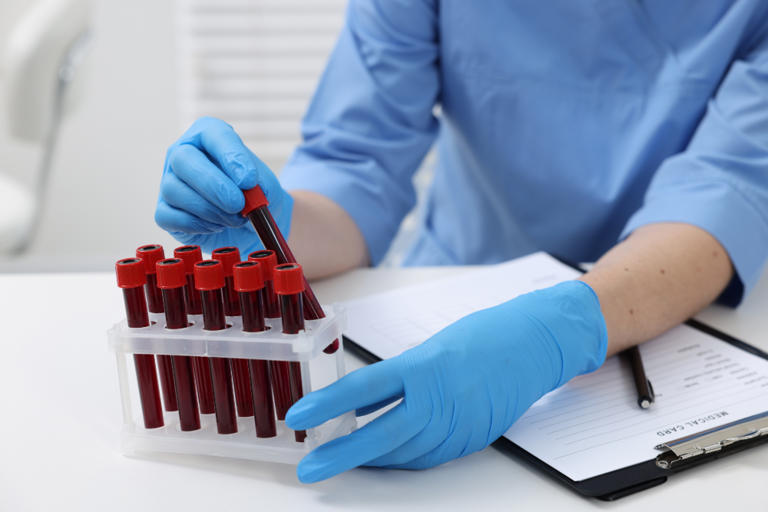
Blood sample taken – just like many standard labs.
-
Proteomics – thousands of proteins measured. Some proteins are linked predominantly to a specific organ (for example, brain, heart, liver). Nature
-
Machine-learning algorithm – compares your protein fingerprint to thousands of others to estimate how “old” each organ is compared to peers.
-
Organ-age gap – the difference between your organ’s estimated biological age and your actual age. Positive gap = organ ageing faster.
-
Interpretation – if your heart is ageing 10 years faster, you’re at higher risk for heart-related disease; if your lungs are ahead, then lung-disease risk rises. University College London
It’s important to note: As of now, this type of test is mostly in research and not yet in standard clinical use across the U.S. But the future is close.
The Big Takeaway: Your Biological Age ≠ Birth Certificate Age
If you’re 45 but your kidneys “behave” like they’re 60—or your immune system acts 10 years older—that knowledge is power.
It means:
-
You’re not just a 45-year-old American; you’re a 45-year-old plus the ageing patterns of your organs.
-
You have time to act. The ageing signal shows possible future trouble—not necessarily “disease now.”
-
Lifestyle adjustments matter. The science shows that accelerated ageing often tracks with lifestyle factors (smoking, poor diet, inactivity, excess alcohol, stress). World Economic Forum
What You Can Do Right Now (Backed by Story)
Let’s revisit Rachel. After learning her heart age was elevated, her action plan included:
-
Switching two of her weekly workouts to cardio + interval training (for heart/vascular benefit).
-
Replacing sugary drinks with water and reducing processed food (for inflammation reduction).
-
Prioritizing 7-8 hours of sleep (because poor sleep accelerates ageing).
-
Scheduling a stress-management practice (yoga or meditation) three times a week.
Here’s a broader blueprint for Americans:
1. Get baseline labs — Ask your doctor for comprehensive panels (cholesterol, liver/kidney enzymes, fasting glucose, CRP). Use that as a springboard.
2. Optimize heart/vascular system — It’s common for heart and vessels to age faster. Focus on blood pressure, cholesterol, and daily movement.
3. Support your kidneys and liver — Hydration, moderate alcohol, lean proteins—all help slow organ wear.
4. Brain & immune system matter — Sleep, social connection, cognitive challenges, healthy diet all keep brain/immune age younger.
5. Track sleep and stress — Chronic stress shows up as accelerated organ ageing. Make recovery non-negotiable.
6. Delay or reduce damage — Smoking, excessive alcohol, sedentary behavior, and ultra-processed food accelerate ageing.
7. Monitor long-term — Re-check labs, lifestyle, and if/when organ-age tests become available—use them to guide strategy.
It’s Not Just About Scary Numbers
Yes, the idea of “my heart is 60” when I’m 50 sounds scary. But the goal isn’t guilt—it’s agency.
This research gives you a mirror—not to judge, but to respond. If your lungs are “old,” know you have time to improve them. If your brain looks “younger,” thank your habits and keep them.
For millions of Americans who feel healthy but wonder, “Is everything really okay?”—this adds a layer of depth. It’s not just “no symptoms”—it’s “how well are my organs keeping up?”
Realistic Limits — What This Test Doesn’t Do (Yet)
-
It doesn’t guarantee you’ll not get a disease. It gives risk insight, not fate.
-
It’s not widely available in routine clinics in the U.S.—yet. Think “future of preventive care.”
-
It’s expensive and may not be covered by insurance currently.
-
Organ-age is one piece of the puzzle—genetics, environment, lifestyle all matter.
-
It might create anxiety if taken without a plan. If you get a high ageing signal—make sure it comes with actionable guidance.
Why This Could Revolutionize U.S. Preventive Health
-
Instead of waiting for heart attack or stroke, you identify a heart that’s “old” and intervene early.
-
Instead of cognitive decline waiting until symptoms, you spot a brain that’s accelerated in ageing and sharpen preventive focus.
-
It moves healthcare from reactive to proactive—something American health systems desperately need.
-
It personalizes care. Two 50-year-olds may look the same outwardly—but one’s organs may be ageing faster. This test identifies that hidden difference.
Frequently Asked Questions (FAQs)
Q1: Can any doctor order this organ-age blood test right now?
Not widely. While the research is strong, commercial rollout in the U.S. is still emerging. If you’re curious, you can talk to your primary care doctor or a specialist about advanced proteomic testing — but they may not be routine or fully covered by insurance yet.
Q2: How much does the test cost and is it covered by insurance?
At present, costs may be high (potentially hundreds to thousands of dollars) and insurance coverage limited, since it’s considered a newer predictive tool—not standard care.
Q3: Will knowing my organ age change my lifestyle?
Absolutely—if you let it. Think of it as a wake-up alarm. It gives tangible feedback. You choose how to respond—exercise, diet, sleep, stress management all matter. The test gives direction, not doom.
Q4: Can I improve my organ age—make my organs ‘younger’?
Emerging research suggests yes. Lifestyle modifications (exercise, heart health, diet, reducing alcohol/tobacco, better sleep) have strong impact on slowing or even improving organ ageing trajectories. Your biology is not a fixed equation.
Q5: Which organs usually age faster, and why?
Studies show organs like the heart, vasculature, and immune system often show accelerated ageing. Factors include high blood pressure, smoking, poor diet, chronic stress, lack of exercise—all common in the U.S.
Q6: Will my chronological age still matter?
Yes. Your age still matters. But organ-age tests add nuance—they help show how well your organs are doing for your age and identify which areas may need attention.
Final Thought: Your Office Visit Doesn’t Have to Wait
Rachel’s story is just one. But it illustrates the key—knowledge invites action. As an American adult, you don’t have to wait until you feel unwell or a scan shows damage. You can start with labs, lifestyle changes, and when available, organ-age testing.
Think of your body not just as “55 years old” but as “55 years old with a heart that’s 62, lungs that are 50, brain that’s 53.” That mindset shift changes how you live today.
Aging isn’t one rate for all. Some organs may lag behind; others stay resilient. The new blood-test science puts the spotlight where it matters—on the weak link so you can strengthen it before it fails.
Because life isn’t just about years—it’s about how well you live them.
You are more than your birthdate. And your organs are speaking. Will you listen?