
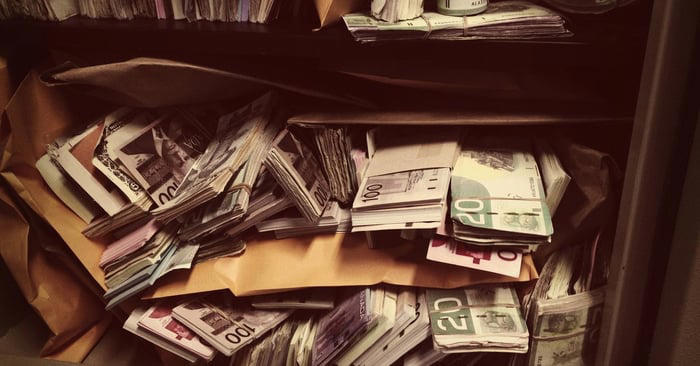
Introduction: The Hidden Risk of That Cash Under the Mattress
It’s funny how many of us still do it. We hide cash in envelopes, tuck it into a shoebox, or slide it under the mattress “just in case.” Maybe it’s a habit passed down from our grandparents who didn’t trust banks. Or maybe it’s that little sense of comfort knowing there’s something physical close by if things ever go south.
But here’s the truth—keeping a chunk of cash at home might not be as safe or smart as it feels. Whether it’s inflation slowly eating away its value, a sudden fire, or a break-in, your hard-earned money is at risk when it sits idle and unprotected.
So where should you keep it instead? In this article, we’ll walk through five simple, effective, and low-stress alternatives that smart Americans are using in 2025 to store (and even grow) their emergency cash—without stuffing it under a mattress.
1. High-Yield Savings Accounts: Safe, Liquid, and Effortless
Once upon a time, a savings account barely paid enough to buy a coffee in a year. But now, high-yield savings accounts (HYSAs) have made keeping your emergency fund in the bank actually worth it.
These accounts offer interest rates up to 4–5% annually, depending on the institution. That means your money doesn’t just sit there—it grows a little each month.
The beauty? It’s still easily accessible. If your car breaks down or you need quick cash for a medical bill, you can transfer the money instantly.
Pro tip: Choose an FDIC-insured online bank. They often offer higher rates since they don’t have physical branches. It’s safe, digital, and perfect for Americans who like control from their phone or laptop.
2. Money Market Accounts: For the “Safety-First” Saver
If you want the peace of mind of a savings account but prefer a slightly higher yield and a few check-writing privileges, a money market account might be your perfect middle ground.
These accounts are a favorite among retirees and cautious savers in the U.S. because they combine liquidity, security, and modest growth.
Think of it as a hybrid between checking and savings—it’s flexible, reliable, and your cash is still working for you. You can usually withdraw a few times per month without penalties, making it a great option for short-term needs.
Why it’s better than cash at home:
Your money is protected from theft, insured, and earns interest while still being available when life throws a curveball.
3. Certificates of Deposit (CDs): When You Don’t Need the Cash Right Away
Remember when your parents used to talk about “locking in” money in a CD? It’s not old-school—it’s smart strategy.
If you have extra cash that you don’t need immediately, Certificates of Deposit (CDs) can offer higher interest rates than savings or money market accounts.
You basically lend your money to the bank for a set period (say 6 months, 1 year, or 5 years), and in return, the bank pays you interest.
Example: Let’s say you put $10,000 in a 12-month CD at 5%. That’s $500 earned in a year without lifting a finger.
The only rule: You can’t withdraw before the maturity date without paying a small penalty. So, only invest money you won’t need urgently.
Smart move: Create a CD ladder—split your money across multiple CDs with different end dates so you always have one maturing soon.
4. Treasury Bills (T-Bills): Uncle Sam’s Promise to Pay You Back
T-Bills are the quiet superstar of low-risk investing. Essentially, you’re loaning money to the U.S. government for a short period (usually 4 weeks to 1 year).
They’re one of the safest places to park your money because they’re backed by the full faith and credit of the United States. Plus, they currently offer solid returns compared to traditional savings accounts.
You can buy them directly from TreasuryDirect.gov with as little as $100, or through your bank or broker.
Why Americans love them:
-
Virtually zero default risk
-
Competitive returns
-
Great for medium-term savings goals
For example, if you’re saving up for a car next year or planning a big vacation, T-Bills can keep your money growing safely while you wait.
5. Short-Term Investment Funds or ETFs: For the Slightly More Adventurous
Now, if you’re ready to take a baby step beyond savings accounts, short-term bond funds or ETFs (Exchange-Traded Funds) can help your money grow a little faster.
These funds invest in a mix of bonds and government securities, offering better returns than cash without the rollercoaster ride of the stock market.
Example: A short-term bond ETF might earn 4–6% annually, while your risk remains relatively low.
This is perfect for people who want to beat inflation but don’t want the stress of daily stock price swings.
Just remember: Unlike savings accounts, investments aren’t FDIC-insured. But if you diversify smartly and invest in well-rated funds, your risk stays minimal.
Why Keeping Cash at Home Is Riskier Than You Think
It’s tempting to think, “It’s just a few thousand dollars—it’s fine.” But here’s what most people don’t realize:
-
Inflation eats your money. Every year, that cash loses buying power. $100 today might only buy $90 worth of goods next year.
-
It’s not insured. If there’s a fire, flood, or theft, your cash is gone—no refunds, no safety net.
-
It limits your opportunity. Cash that sits idle doesn’t earn a penny. That’s lost growth every single day.
It’s not about being paranoid—it’s about being practical. Smart money management in 2025 is about using the right tools to keep your wealth safe, liquid, and productive.
How to Build a Smart “Cash Strategy”
You don’t have to go all in on one option. The smartest Americans spread their money across multiple secure places, creating balance and flexibility.
Here’s an example breakdown:
-
40% in a high-yield savings account (for emergency access)
-
30% in CDs or T-Bills (for medium-term safety and growth)
-
20% in short-term ETFs or bond funds (for slightly higher returns)
-
10% in physical cash (for absolute emergencies only)
This structure keeps your money working while still giving you peace of mind.
A Real-Life Example: The $20,000 Decision
Imagine this: Sarah, a single mom from Ohio, used to keep $20,000 hidden in her closet—her “safety stash.”
Then one summer, her air conditioner broke, and she realized something—her “safe” cash wasn’t earning a cent. Inflation had eaten hundreds of dollars in value.
So she moved her savings into a high-yield account and put $5,000 into a 12-month CD. A year later, she made nearly $1,000 in interest. That’s money she didn’t have to work extra hours for.
It wasn’t about getting rich—it was about getting smart.
Final Thoughts: Money at Home Feels Safe—Until It Isn’t
Keeping cash at home can feel comforting, but it’s really an illusion of safety. Real financial security comes from knowing your money is protected, insured, and growing quietly while you live your life.
The best part? You don’t need a financial degree or millions of dollars to do it. You just need to take that small, smart step away from the shoebox and toward financial strategy.
Because in 2025, money shouldn’t just sit—it should serve you.
FAQs
1. Is it okay to keep some cash at home?
Yes, keeping a small emergency amount (like $200–$500) for immediate needs is fine. But avoid storing large sums long-term—it’s unsafe and unproductive.
2. Are online banks safe for savings accounts?
Absolutely, as long as they’re FDIC-insured. That means your money is protected up to $250,000 per depositor.
3. What’s the difference between a money market account and a savings account?
Money market accounts usually have slightly higher interest rates and limited check-writing privileges. Both are safe and insured.
4. How do I start buying Treasury Bills?
Visit TreasuryDirect.gov—you can open an account in minutes and start with as little as $100.
5. What’s the safest place to keep money if I don’t like risk?
A high-yield savings account or short-term CD offers the best mix of safety, liquidity, and growth.