
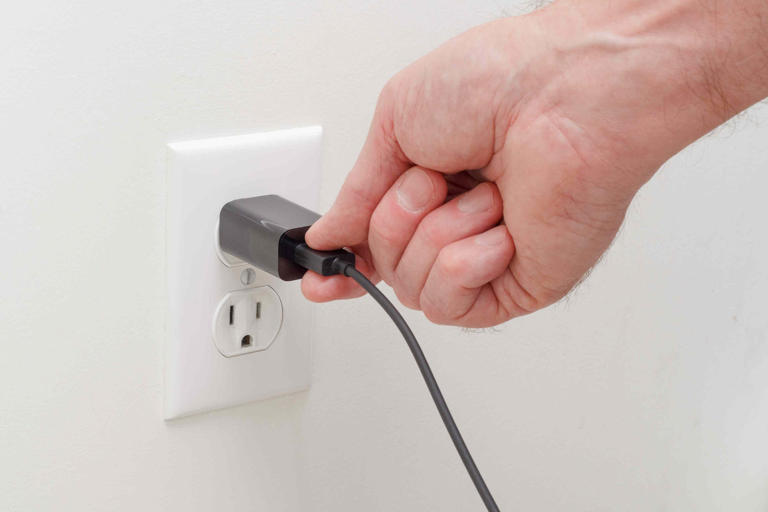
It’s a modern-day dilemma whispered in kitchens and home offices across the country: that phone charger left perpetually plugged in, or the laptop cord nestled in the outlet long after the device is fully charged. A small, nagging voice in the back of your mind asks, “Should I unplug that?”
Is it a harmless habit, or is it secretly driving up your electricity bill and creating a fire hazard in your walls?
To settle the debate once and for all, we went straight to the source. We spoke with Michael Garcia, a master electrician with over 20 years of experience, to get the real, unvarnished truth.
“Homeowners worry about the big things, like a faulty circuit breaker,” says Garcia, “but it’s the small, everyday habits that often cause the most confusion and, in rare cases, can lead to big problems.”
So, let’s plug into the facts and separate the myths from the reality.
The Short Answer: Yes, You Should Unplug Them. But Why?
The most direct answer is that unplugging unused chargers is a good practice. However, the reasons are more nuanced than you might think. It’s not just about one thing; it’s about a combination of safety, energy savings, and device longevity.
Let’s break down the three key factors.
1. The “Vampire Power” Drain: The Cost of Convenience
This is the term you’ve likely heard. Also called “phantom load” or “standby power,” this is the electricity a device consumes even when it’s not actively charging your phone or laptop.
What the Electrician Says:
“Vampire power is real,” confirms Garcia. “Any charger with a ‘power brick’—that little black box on the plug—or a charger that feels warm to the touch when nothing is attached is drawing a small amount of current.”
But how much are we really talking about?
“The energy draw from a single modern phone charger is minimal,” Garcia explains. “We’re talking about a few watts, maybe costing you a quarter or two over an entire year if you left it plugged in 24/7.”
The Bottom Line on Cost: If you’re trying to slash your electric bill, focusing solely on chargers is like trying to save money by skipping one potato chip a year. The real energy vampires are bigger appliances: game consoles on standby, old cable boxes, desktop computers left running, and coffee makers with digital clocks.
So, while the principle of eliminating waste is good, the financial impact of a single charger is negligible.
2. The Safety Factor: The Most Important Reason
This is where Garcia’s tone gets more serious. While the energy waste is small, the safety risk, though low, is the more compelling reason to unplug.
What the Electrician Says:
“Electricity generates heat,” he states plainly. “A charger that is constantly energized is constantly under a small amount of thermal stress. Over many years, this can cause the internal components to degrade, and the plastic casing can become brittle.”
He outlines two primary safety concerns:
-
The Risk of a Faulty Charger: “A cheap, off-brand, or damaged charger is the biggest risk. If its internal components fail, it can short-circuit. When this happens, the resulting surge of current can generate intense heat, potentially leading to a fire. This risk is significantly higher if the charger is buried under a couch cushion, trapped in a carpet, or in a dusty outlet.”
-
The Dangers of Wear and Tear: “Outlet sockets wear out over time. A plug that is constantly left in can become loose. A loose connection creates resistance, and resistance creates a significant amount of heat—a primary cause of electrical fires.”
The Bottom Line on Safety: Unplugging chargers reduces two key risks: the chance of a faulty charger overheating and the long-term wear on your outlets. It’s a simple, 3-second habit that eliminates these potential hazards entirely.
3. The Impact on Your Devices: Does It Preserve the Charger?
You might also wonder if leaving a charger plugged in shortens its lifespan.
What the Electrician Says:
“From an engineering perspective, the constant cycle of being energized and de-energized does contribute to very slow wear on its components,” says Garcia. “However, for a high-quality charger, this is usually so slow that you’ll lose the cable physically long before it fails electrically from being left plugged in.”
The bigger threat to your charger’s life is physical damage—yanking it out by the cord, bending it at sharp angles, or overheating it while in use.
The Electrician’s Verdict: A Practical Guide
So, should you sprint around the house unplugging every charger the moment your device hits 100%? Not necessarily. Garcia recommends a practical, tiered approach.
1. Unplug Based on Location and Situation.
-
YES, definitely unplug: Chargers in infrequently used rooms (guest bedrooms, garages), those hidden behind furniture, or any charger that feels warm when not in use.
-
It’s less critical: A charger in a kitchen outlet that you use daily. The convenience might outweigh the minimal risk.
2. Quality Over Everything.
“This is non-negotiable,” Garcia emphasizes. “Always use chargers and cables that are certified by a recognized national testing laboratory (like UL or ETL). That little logo means the device has been built to specific safety standards. A cheap, knock-off charger is a gamble not worth taking.”
3. Be Mindful of the Environment.
“Use a power strip for your entertainment center or home office,” he suggests. “That one central hub powers your TV, game console, speakers, and chargers. With one flip of the switch when you leave the house or go to bed, you cut power to a dozen potential vampire loads and eliminate any safety risk. It’s the ultimate two-for-one.”
4. Listen to Your Home.
“If a charger, an outlet, or a power strip feels hot, smells like burnt plastic, or makes a buzzing sound, that’s your home telling you something is wrong. Unplug it immediately and have it inspected. Don’t ignore those warnings.”
The Final Connection
So, should you unplug your chargers when not in use?
The expert answer is a qualified yes. While the financial savings on your electricity bill are almost microscopic, the safety benefits—though the odds are low—are real. It’s a simple, mindful habit that reduces unnecessary risk and eliminates a tiny bit of energy waste.
Think of it less like a money-saving strategy and more like locking your front door. You don’t expect a burglar every night, but the peace of mind and the good habit are well worth the minimal effort.
As Michael Garcia puts it, “In my line of work, the best problem is the one that never happens. A few seconds to unplug a charger is a cheap insurance policy for a problem you’ll never have to call me to fix.”