
I still remember the day my little niece, Jude, turned five. She stood proudly in her tiny red sneakers, clutching a piece of paper she’d drawn in crayon (“Mom,” “Dad,” and a bright yellow sun). When I asked her what she’d drawn, she told me, “This is us, and we are at the park, and we will fly the kite tomorrow.” In that moment I realized: five is magical. It’s neither the toddling preschooler phase nor the big-kid phase fully—but it’s something in between. And it’s a golden window for growth.
If you’re a parent (or grandparent, or caregiver) living here in the U.S., this article is for you. Think of it as a story of the year ahead: how your 5-year-old is growing, becoming, experimenting, and what key skills they should be working on—with love, patience, and practical steps you can take together. Because they may ask for popsicles before dinner one minute and then recount a dinosaur-adventure in one breath. That’s five-year-old magic.
1. The Heart of Who They Are: Social & Emotional Growth
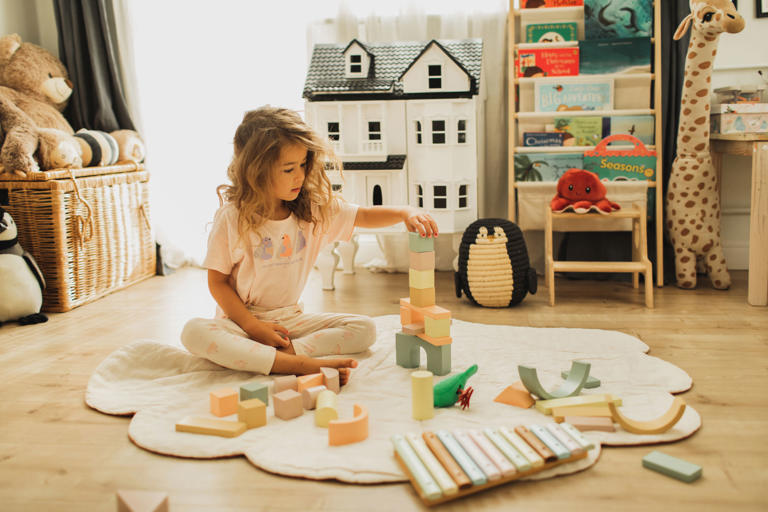
Little Jude the other day told her friend at preschool she didn’t want to share the red block tower she built. Then, five minutes later, she gave it away with a solemn “Here you go, you build now.” At age five, children begin to swim in a sea of emotions, friendships, expectations—trying on independence and still needing the safety net of home.
Understanding right from wrong, and why
By five, children are beginning to grasp rules, consequences, fairness—not just “I will get in trouble” but “I hurt their feelings.” They’re forming a basic moral compass.
You can support this by narrating feelings at home: “I noticed you built that tower all by yourself—cool! When Jamie’s tower fell, he looked sad. What could you say to help him feel better?” This helps them step beyond “I got caught” into empathy.
Seeing others’ feelings (Theory of Mind)
At this age your child starts realising: other people have thoughts, hopes, and hurts separate from mine. This new insight leads to sharing, caring—and occasionally, more cunning (“She won’t let me have the toy… maybe I’ll take and run!”).
Encouragement: Role-play. “Pretend you are Grandma and you lost your glove; how would you feel?” This helps them practice walking in another’s shoes.
Emotion regulation and confidence
Big feelings are part of the package. Your 5-year-old may cry hard at bedtime one night, then skip joyfully the next. Building in secure bedtime routines, lots of verbal praise (“I saw how you waited your turn”), and giving them controlled choices (“Do you want to brush your teeth first or put on pajamas first?”) helps them feel competent and safe.
Belonging and contributing
You’ll be amazed: many five-year-olds want to help around the house. They feel grown-up when given tasks like carrying dishes, matching socks, sweeping crumbs. These chores are more than practical—they build identity, self-worth, and responsibility.
Make it fun: “You’re officially our Sock Sorting Captain!” And always: lots of high-fives for effort.
2. Talking, Listening, Story-Weaving: Language & Communication
One of the richest pleasures of five is the conversations—they grow in depth, length, connections. Your child is no longer just pointing; she’s telling stories, asking “why,” wondering “when.”
Telling longer stories and having real chats
By age five, many children can tell a story with at least two events (“First I went to the slide, then I built a tower”). They’re developing back-and-forth conversation. Ask them open-ended questions: “What would happen if the dinosaur instead built the castle himself?” This kind of play fosters language and imagination.
Expanding vocabulary and concepts
Words like “yesterday,” “morning,” “later,” “tomorrow,” start making sense. They can have longer sentences (“We’ll dance after lunch, then I will draw my picture.”).
You can help by weaving richer language into your day: “We will go to the store after lunch—so ‘after’ means later, okay?” Encourage them to tell you what they learned at school, what they liked—and listen deeply.
Comprehension, following instructions
Your child should begin following multi-step instructions: “Pick up your book, put it on the shelf, then wash your hands.” Practice at home by doing tasks together, narrating each step, and then letting them try. Celebrate success—and treat mistakes as learning.
Conversation and social language
Encourage them to ask questions, express ideas. When you read a book together, pause and ask: “What do you think the cat is going to do next?” Or “Why is Lily sad in this picture?” These small moments build active thinking, empathy, and readiness for school.
3. Thinking Wide and Deep: Cognitive & Learning Skills
The age of five marks the shift: your little learner begins to ask bigger questions—“Why does snow melt?” “How did the dinosaur disappear?” Their brain is stretching, exploring, connecting. Let’s harness that.
Counting, sorting, letters and symbols
By five, many children can count to ten or beyond, name some letters, maybe even write their first name. They can understand money coins, use words about time (“tomorrow,” “yesterday”). The U.S. guidelines highlight these emerging skills.
At home: everyday practices. Count the steps to the mailbox, sort laundry by color, point out letters on signs. Math and literacy become a play zone, not a drill.
Curiosity and problem-solving
Your child will increasingly ask “why?” and “how?” This is gold. When they puzzle: “Why does the tree lose leaves?” don’t rush to answer—flip it: “What do you think?” Help them explore, hypothesize, ask their own questions. Guide them gently: “If leaves fall because… what happens to the tree in winter?” This nurtures critical thinking.
Focus and attention span
At age five children begin staying attentive for longer—say 5–10 minutes on a story or craft. But they still need breaks, physical movement, fresh air. Set up activities with options and low pressure: “Would you like to draw or play blocks first?” transitions them smoothly.
Creativity and imagination
Never underestimate creative play. Paints, blocks, pretend kitchens—all are tools for learning. Imaginative storytelling, building castles out of pillows, playing “store” with stuffed animals: these develop executive functions (planning, flexible thinking) and confidence. Encourage the mess and the magic.
Play + learning = growth
Quality play is not frivolous—it is learning. When children act out roles, build worlds, solve pretend problems, they are practising complex skills: self-regulation, social understanding, symbolic thinking. This is especially important in the USA because school readiness is more than reading—it’s about navigating people, ideas, tasks.
4. The Body In Motion: Physical & Motor Skills
While the mind leaps ahead, the body keeps up—and at age five the leap is noticeable. Suddenly you’ll see skipping, hopping, drawing refined shapes, maybe even riding a bicycle with training wheels.
Gross motor skills (big movements)
Your five-year-old will likely be hopping on one foot, skipping, walking backwards, climbing play structures confidently. These are signs of strength, coordination, balance. Outdoor play, tumbling, dancing—all great. Encourage at least 20–30 minutes of active play each day.
Balance games: “Walk like a tightrope,” hop-skip around obstacles, play “freeze dance.”
Fine motor skills (small, precise movements)
Holding scissors, cutting curves, drawing triangles, writing letters. These skills underlie success in school (writing, art, self-help). At home: finger-painting, lacing beads, building with Lego-style toys, helping set the table, tying shoes (or practising).
Praise their attempts: “Wow, you held the scissors so carefully!”.
Self-help and independence
By five many children can dress themselves (with minimal help), tie shoes (or are learning), use utensils, fasten buttons/snaps, brush teeth, and do simple chores. These daily tasks build confidence and autonomy.
Tip: Give them ownership. “You’re in charge of clearing your plate today.” Let them succeed—even imperfectly.
Healthy rhythm: sleep and rest
Active muscles need rest. A 5-year-old typically needs 10–13 hours of sleep (including possible quiet time). Screens should ideally be limited before bed; a calm routine helps. Sleep supports behavior, mood and learning.
Create rituals: story time, quiet chat, dim lights—all elements to anchor rest.
5. Exploring the Wide World: Social Skills & Independence
Five brings more playmates, more explorations, more independence—but with safety nets. Your child is ready for the world in small steps.
Taking turns, cooperating, playing fair
Games will help. Board games, tag, building together. At this age children can practice waiting, recognising others’ turns, apologising. Role play conflicts: “You both want the red cup—what can we do?” Encourage solution-sharing.
Also: model empathy: “I know you feel sad your friend took the swing. What could you do to ask for a turn next?”
Navigating friendships
They begin to make choices: who they play with, how they interact. Encourage inclusive play, greeting new kids, inviting someone who’s alone. Talk about feelings: “How do you think she felt when no one asked her in?”
Help them learn phrases: “Can I play too?”, “It’s okay if you want to go first.”
Safety and sense of boundaries
Your child is discovering more independence—walking to school, playing in yard, maybe riding a bike with supervision. Teach rules: “Stop at the curb,” “Check before crossing.” Use real-life scenarios to talk through what to do: “If you are at the playground and you can’t find Mommy, what will you do?”
Independence with guidance
Encourage doing by themselves: “You pick the book you want,” “You decide what snack out of these two.” But stay close. They’ll stumble. Mistakes are growth. Celebrate effort, not perfection.
6. Ignite Their Inner Spark: Motivation & Self-Confidence
Sometimes I see five-year-olds shrink before a new task: “I can’t draw a car yet.” Your job: cheerleader. Guide them to believe they can learn. The foundation of lifelong motivation starts here.
Encouraging mastery—small wins matter
Break big tasks into small steps. “Today let’s try drawing a circle, then later we’ll add wheels.” Let them track their progress: “Yesterday you drew a car. Today you added windows.” Celebrate progress: “Look at how much you improved!”
Supporting a growth mindset
Use language that reinforces “I can try,” not “I’m perfect.” E.g., “You worked so hard and your drawing looks different—tell me about it.” Avoid comparisons: “You’re doing your best.”
Encourage challenges: let them struggle briefly before stepping in. Frustration is part of growth as long as it doesn’t overwhelm.
Getting outside comfort zones—safely
New experiences build confidence. Join a swim class, a tumbling class, nature walk, museum visit. Let them choose an activity they’re curious about. Celebrate the trying—even if they don’t succeed at first.
Their voice matters
Listen deeply. What do they say about themselves? “I’m just little.” Counter it: “You’re growing so much. Tell me one thing you did today that you’re proud of.” Help them reflect on their own achievements.
When they help, feature that contribution: “Because you matched the socks, our morning was smoother. Thanks for being a team player.”
7. Creating A Supportive Environment: What You Can Do
You are their first teacher. The home environment sets the tone.
Routine + consistency
Dinner at the same time. Bedtime ritual. After-school “wind down” time. Predictability gives security and fosters growth. For example, “After we come home we’ll read for 10 minutes, then you can draw or play.” Stability supports risk-taking.
Language-rich environment
Speak, listen, question, explore. Make everyday life a conversation. When going somewhere: “What do you see? Why do you think that sign is blue? What might happen next?”
Read together every day—even just a page. Let them ask, imagine, comment.
Time for play—structured and unstructured
Block building, pretend play, outdoors running, art, dramatic play. Let them choose. Provide materials. Step back, observe, ask curious questions.
At the same time: provide a few structured tasks—chores, puzzles, “draw your morning,” little experiments (“What floats?”). Balance helps growth.
Limit screen time, increase physical & social play
Screen use can be tempting, but active play, human interaction, nature walks—they matter hugely. Encourage building forts, climbing, dancing, playing games. These feed body, brain, social skills.
Connect with peers and mentors
Playdates, preschool/kindergarten, library story times, children’s museum visits—these expand their world. Let them meet kids of different ages, activities, backgrounds. This fosters social skills, adaptability, empathy.
Celebrate each milestone—no matter how small
Did they tie their shoe? Did they wait their turn? Did they share art with you? Did they speak up for a friend? Let them know you see their effort. Words matter: “You noticed Jamie was upset and asked if he was okay—that was kind of you.”
8. Recognizing When Extra Support May Help
Every child grows at their own pace. If your 5-year-old is significantly behind peers in certain areas (e.g., very little speech, severe coordination issues, constant frustration, difficulty socialising), speaking to your pediatrician or child-development specialist is wise. U.S. agencies emphasise tracking milestones and getting help early if needed.
But don’t worry if they aren’t doing everything “on schedule” yet—what matters most is progress, interest, and effort.
9. Real-Life Story: “Matcha the Curious”
Let’s follow “Matcha,” a five-year-old in a suburban home in Ohio, to illustrate how things play out.
Morning:
Matcha wakes, chooses her outfit (with some help), brushes her teeth, ties one shoelace (almost alone). At breakfast we ask: “What are you going to do after breakfast?” She says: “I’ll play blocks. Then I’ll go on the slide.” We talk through the sequence: “Blocks first, slide next. After that—snack time.”
Mid-day:
At preschool she builds a tower. Another kid knocks it down. Matcha pauses, says: “I’m sorry I knocked it. Want to build together?” Boom—empathy, cooperation. Later she scouts the playground, asks to try the monkey bars. She hops off, wide grin.
Afternoon:
Home and we ask: “What story shall we read?” She picks a dinosaur adventure. After reading, I ask: “What do you think the dinosaur felt when he lost his nest?” She hesitates and then says: “Sad. He looked for his mommy. But then he found other friends.” That’s perspective taking.
Evening:
After dinner she clears her plate, sorts clean silverware (her “job”). Then outside we play “freeze dance.” Later she draws a triangle, a stick figure with six body parts, and writes her name. Bedtime routine: dim lights, story, cuddle—sleep.
Over one week she leaps—not by giant bounds every day, but by little steps: more coordination, more words, more sharing, more independence, more identity.
10. Final Thoughts
Five is not the finish line—it’s the launching pad. It’s the time when your child begins to feel not just smaller-young-child, but more capable, more curious, more part of the world. As a caregiver in America you have both opportunity and responsibility: to give structure and freedom, guidance and independence.
Remember:
-
Focus on progress, not perfection.
-
Celebrate effort, not just results.
-
Encourage questions, not just answers.
-
Provide support, not just instruction.
If your toddler was the seedling, your five-year-old is the sprout reaching toward the sky. With the right light, nourishment, room to stretch—and a secure root—that sprout will grow into something strong. Enjoy every “why?” “look!” “I did it!” moment. Because the year of five is unforgettable.
FAQ: Frequently Asked Questions
Q1: My child hasn’t started writing letters yet—is that okay?
Yes. At five many children begin writing letters and their first name—but there is wide variation. Focus on interest and opportunity rather than deadlines. Offer writing tools, encourage scribbles and names, and praise attempt. If by six the delay seems significant, you can talk to your pediatrician.
Q2: How much screen time is appropriate for a 5-year-old?
Moderation is key. While devices can offer educational content, your child needs real people, real play, real movement. Limit screens to short sessions, avoid them 1–2 hours before bedtime, and accompany your child—talk about what they watch. Replace screen time with active play when possible.
Q3: My child seems reluctant to try new activities—is that normal?
Yes. Five-year-olds often test boundaries between comfort and risk. It’s normal to hesitate. Encourage gently, give choices (“Would you like to try swimming or soccer?”), and reassure them that trying—even if they don’t excel—is a win. Celebrate the effort, not just the outcome.
Q4: How can I support my child’s language growth at home?
Talk often, ask open-ended questions, read together daily, let them narrate their day (“What was your favorite part?”), and pause during reading to ask predictions. Encourage their storytelling, listen, and validate their ideas. Use new vocabulary, explain words (“That’s a huge tower—you built a gigantic one!”) in everyday contexts.
Q5: Is it too early to start formal academics like reading and math?
No—it’s not too early—but for a five-year-old, “academic” work should feel like play, not pressure. Recognising letters, numbers, counting, sorting, comparing are all fine. But intense worksheets or drills are unhelpful. The goal is curiosity and comfort, not perfection. Foster a love of learning by embedding it in games, conversation, real life.
Q6: My child can’t skip yet—is that a concern?
Not necessarily. Skipping and other advanced physical skills are expected around this age, but children vary widely. Provide safe opportunities for practice—running, obstacle games, dancing—and give praise. If by age six you notice major coordination issues (frequent falls, inability to hop at all), you could talk to your pediatrician.
Q7: How do I handle tantrums and big emotions in a five-year-old?
Big emotions still happen at age five. When they do: stay calm, label the feeling (“I see you’re upset because your block tower fell”), offer solutions (“Would you like to rebuild or move to the next toy?”), set boundaries (“We don’t throw blocks”), and redirect. After the outburst, talk it through when calm: “What happened? What can we do next time?” This builds self-regulation skills.