
The Day Everything Changed
It was early January — the air was crisp, the resolutions were fresh, and Sarah from Austin was determined.
This was her year. She had just turned 35, her gym membership card was shiny and untouched, and her sneakers had that new-rubber smell of ambition.
For two weeks, she went religiously. Then life happened.
Late meetings. Traffic. A cold snap that made her car groan. Suddenly, those 6 a.m. workouts became 6 a.m. snooze buttons.
By February, she wasn’t going anymore — but the monthly gym fee still quietly left her account like clockwork.
Then one morning, coffee in hand and wrapped in her blanket, she realized something:
“What if I stop chasing motivation… and just start moving where I am?”
That’s how her home workout journey began — with no fancy machines, no trainer, and no pressure. Just her, her living room, and a decision.
Why Home Workouts Are Booming Across America
Before we jump into the “how,” let’s address the why.
Home workouts aren’t just a pandemic trend. Across the U.S., more people are discovering the freedom and flexibility of working out right where they live.
Think about it:
-
No commute to the gym.
-
No waiting for the treadmill.
-
No self-consciousness about being a beginner.
-
No $80-a-month memberships.
It’s fitness on your terms.
Whether you’re in a suburban home, a tiny New York apartment, or a rural farmhouse, your body is the only real equipment you need to start.
Sarah realized this quickly — and within three months, she’d built a simple but powerful daily routine that made her feel stronger, lighter, and prouder than she had in years.
The Mindset Shift: Start Small, Stay Consistent
When most Americans think of “working out,” they imagine intense bootcamps, heavy weights, or Instagram-perfect bodies.
That’s the biggest mistake beginners make — thinking they need to start big.
The truth? You only need to start today.
For beginners, consistency beats intensity every single time.
Sarah’s first “workout” wasn’t even 20 minutes. She just did:
-
10 squats
-
10 push-ups (on her knees)
-
20 jumping jacks
-
30 seconds of planking
She was out of breath, red-faced, but proud.
That small effort sparked momentum. And momentum — not motivation — is what drives long-term success.
Creating Your Perfect Home Workout Space
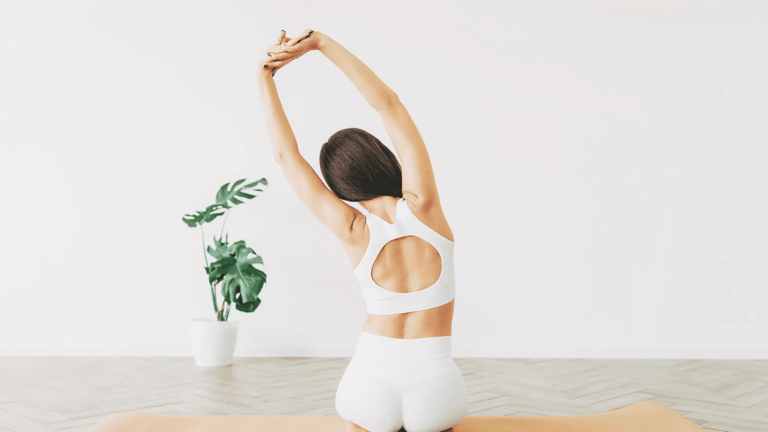
Before you start sweating, set the scene. You don’t need a home gym — just a small, dedicated area that feels like your workout zone.
Here’s what works best:
-
Clear the clutter: Find a corner or space where you can stretch your arms fully without hitting furniture.
-
Keep essentials handy: A yoga mat, towel, and water bottle make a huge difference.
-
Light & air: Open windows or add a lamp for brightness. Movement feels better in fresh, energized spaces.
-
Add motivation: Hang a small quote, print your goal, or even place a mirror nearby to track form and confidence.
Sarah transformed her small living room corner into her “mini studio.” She added a candle, a mat, and her Bluetooth speaker — and suddenly, the space invited movement.
The 4-Week Beginner Home Workout Plan
Here’s the same plan Sarah followed to build consistency, confidence, and strength — all at home.
Week 1: The Foundation (15–20 Minutes a Day)
The goal: build routine, not perfection.
Workout:
-
10 Squats
-
10 Push-ups (knee or wall version)
-
15 Lunges (each leg)
-
20 Jumping Jacks
-
30-Second Plank
Repeat 2 rounds.
Focus on form, not speed.
Celebrate showing up — that’s the hardest part.
Week 2: Building Strength (20–25 Minutes)
Now that your body’s adjusting, add a little more challenge.
Workout:
-
15 Squats
-
10 Push-ups
-
20 Mountain Climbers
-
15 Glute Bridges
-
45-Second Plank
Repeat 3 rounds.
This week is about control and breathing. Notice how your body feels more capable — that’s progress happening.
Week 3: Endurance & Flow (25–30 Minutes)
You’re no longer a beginner. Time to add movement flow.
Workout:
-
20 Jumping Jacks
-
15 Squats
-
10 Burpees (or modified version)
-
20 Sit-ups
-
1-Minute Plank
Repeat 3 rounds.
Pro Tip: Play your favorite upbeat playlist. The right music makes every move feel easier.
Week 4: Confidence Phase (30–35 Minutes)
By now, you’ll feel stronger, more flexible, and mentally sharper. Time to own it.
Workout:
-
25 Jumping Jacks
-
15 Push-ups
-
20 Lunges
-
20 Glute Bridges
-
10 Burpees
-
1-Minute Side Planks (each side)
Finish with stretching and deep breathing.
You’ve built a habit that will outlast any resolution.
The Role of Nutrition in Your Home Workout Journey
You can’t out-train a bad diet — and that’s where most beginners in the U.S. struggle. With easy access to fast food, sugary drinks, and oversized portions, your kitchen can either be your greatest ally or your biggest enemy.
Simple Nutrition Guidelines:
-
Start with water: Most Americans are dehydrated. Begin each morning with a full glass.
-
Add color to your plate: The more colorful your meals (fruits, veggies, grains), the healthier your gut and energy levels.
-
Prioritize protein: Eggs, chicken, beans, tofu, and Greek yogurt help build lean muscle.
-
Plan snacks: Swap chips for nuts, candy for fruit, soda for sparkling water.
-
Eat mindfully: No phones, no rushing — your body digests better when you slow down.
Sarah didn’t go on a restrictive diet — she simply cooked more at home and made smarter choices.
And that alone changed everything.
The Mental Benefits of Home Workouts
Beyond the physical, working out at home transforms how you feel.
In just a few weeks, Sarah noticed:
-
Her stress levels dropped dramatically.
-
She slept better and woke up more energized.
-
Her self-esteem improved — not because of how she looked, but because she kept a promise to herself.
Home workouts remind you that you are in control.
In a country where mental health challenges are on the rise, moving your body daily — even for 15 minutes — is one of the best therapies out there.
Common Mistakes Beginners Make (and How to Avoid Them)
-
Starting too hard, too fast.
→ Ease into it. Your goal is to make exercise a habit, not a punishment. -
Comparing progress.
→ Don’t scroll through “fitspo” posts. Your only competition is yesterday’s you. -
Skipping rest days.
→ Muscles grow and recover when you rest. Take at least one full rest day per week. -
Ignoring form.
→ Doing 10 squats wrong does more harm than doing 5 right. Watch your posture. -
Expecting instant results.
→ Real change takes weeks. But every small improvement matters. Celebrate it.
Budget-Friendly Equipment for U.S. Beginners
You don’t need to spend a fortune, but a few basic items can level up your workouts.
| Equipment | Why It Helps | Cost Range |
|---|---|---|
| Yoga Mat | Comfort and grip | $10–$30 |
| Resistance Bands | Adds strength without weights | $8–$20 |
| Dumbbells (5–10 lbs) | Great for toning arms & core | $15–$30 |
| Jump Rope | Cardio boost anywhere | $5–$10 |
| Step Platform | For elevated exercises | $20–$40 |
Tip: You can find great deals at stores like Walmart, Target, or even Facebook Marketplace.
How to Stay Motivated at Home
Let’s be honest — working out at home can feel lonely or boring sometimes. But here’s how to keep it exciting:
-
Create a workout playlist that hypes you up (think: Lizzo, Imagine Dragons, or 80s hits).
-
Track your progress with photos or a fitness journal. Seeing improvement keeps you going.
-
Set mini goals: “Do 5 push-ups without stopping” or “Work out 4 times this week.”
-
Join an online fitness community — Reddit, Facebook groups, or even YouTube comment sections can offer huge support.
-
Reward yourself. New leggings, a smoothie, or a rest day — celebrate milestones!
Sarah’s motivation came from watching her energy levels rise. When she stopped focusing on “weight loss” and started focusing on “feeling better,” she never wanted to stop.
Building a Long-Term Lifestyle
After four months, Sarah didn’t just lose 12 pounds — she gained something far more valuable:
control over her body, her time, and her confidence.
That’s the secret most people miss.
Fitness isn’t about the six-pack or the scale — it’s about the freedom to live life with energy and joy.
She no longer needed a gym. Her living room became her sanctuary, her playlist became her trainer, and her discipline became her strength.
Home workouts aren’t a shortcut — they’re a lifestyle shift.
Once you start, you’ll realize that your best fitness investment was never a gym membership.
It was you — showing up, every day, for yourself.
Sample Home Workout Schedule for Busy Americans
| Day | Focus | Duration | Notes |
|---|---|---|---|
| Monday | Full Body | 25 mins | Kick off strong with squats, planks, lunges |
| Tuesday | Cardio | 20 mins | Jump rope, high knees, mountain climbers |
| Wednesday | Rest/Stretch | 15 mins | Yoga or mobility work |
| Thursday | Upper Body | 25 mins | Push-ups, tricep dips, arm circles |
| Friday | Core | 20 mins | Sit-ups, side planks, leg raises |
| Saturday | Full Body + Fun | 30 mins | Dance, HIIT, or outdoor jog |
| Sunday | Rest | — | Reflect and reset for next week |
Final Thoughts: Your Body, Your Home, Your Power
You don’t need perfect gear, expensive memberships, or Instagram abs.
You just need commitment.
Every drop of sweat in your living room, every rep you push through, and every small improvement you feel — that’s proof you’re becoming stronger than your excuses.
Start where you are. Use what you have. Move because you can.
Sarah did it. Millions of others across the U.S. are doing it.
And now, it’s your turn.
💬 Frequently Asked Questions (FAQs)
Q1: How long should a beginner’s home workout last?
Start with 15–20 minutes, 4–5 times a week. As your stamina grows, increase to 30 minutes.
Q2: Can I get real results without going to the gym?
Absolutely. With consistency and a balanced diet, home workouts can build strength, burn fat, and improve energy just as effectively.
Q3: What if I don’t have space or equipment?
No problem. Bodyweight workouts require minimal space — push-ups, squats, planks, and lunges need only a few square feet.
Q4: How soon will I see results?
You’ll feel changes (energy, mood, strength) within 2–3 weeks. Physical results usually show within 6–8 weeks of consistency.
Q5: How do I stay motivated when I feel lazy?
Set tiny goals, track progress, and remind yourself why you started. Even a 10-minute session counts — it’s always better than nothing.
Your Next Step
Don’t wait for “someday.”
Roll out your mat. Play your favorite song. Start with one move — then another.
Because the real magic of fitness doesn’t happen in a gym.
It happens right where you are — at home, in the quiet, with no one watching but your future self smiling back at you.