Picture this: it’s early morning in a suburban home somewhere in the U.S.—maybe Atlanta, maybe Portland, maybe a quiet street in Dallas. You walk into your bathroom, and instead of the strictly functional, antiseptic space you’ve been tolerating, you encounter something altogether different: warm textures, sculptural fixtures, layered materials, mood-lighting, and even a bit of playfulness. It’s not just a bath or shower—they’ve turned the space into a retreat, a design statement, a mood changer. That’s exactly what’s unfolding across American homes as we head into 2026.
In this story-driven article, I’ll guide you through 10 major bathroom trends poised to dominate U.S. home design next year—what they mean, why they matter, and how you can spot or implement them. Each trend is anchored in real observations from designers and publications focused on the U.S. market. At the end, we’ll cover some FAQs to help you think through adoption, cost, and longevity.
1. Bathrooms as “Living Environments”
What this looks like:
-
A freestanding tub placed so it faces a window or a niche, not just shoved in a corner.
-
Soft finishes: plaster, honed stone, natural wood accents, rather than purely glossy ceramic tiling.
-
Lighting that doesn’t scream “bathroom” but could fit in a lounge: warm, diffused, ambient.
Why it matters for the U.S.: Many American households are rethinking homes post-pandemic—more time at home, more desire for comfort, wellness, and personalization. Your bathroom becomes not just a part of your routine, but a place of retreat.
Your actionable tip: If you’re remodeling or just refreshing: think “Would I want to sit here and unwind?” rather than “Does this just serve the function?” Even adding one lounge-style element (a bench, a pendant light, a beautiful view) changes the tone.
2. Texture, Depth & Mixed Materials
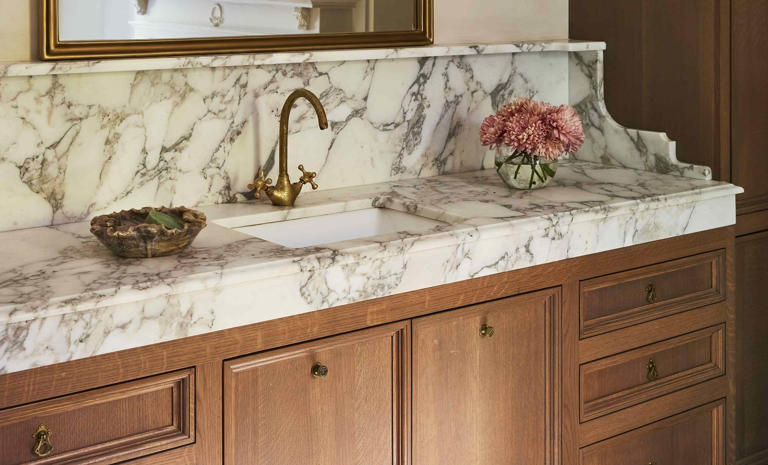
Gone are the days when a bathroom’s design was simply “tiles + white walls + basic chrome.” 2026 brings in texture, depth, mixed materials—wood grains, porous stone, metal mesh, glass, plaster—all layered thoughtfully. According to one specialist: “2026 will be about creating depth and interest by courageously combining different textures, sheens and materials.” decorcabinets.com
In U.S. homes this means:
-
A vanity with wood-grain cabinet, quartz or marble countertop, and maybe reeded glass or metal mesh panels.
-
Walls of microcement or honed stone paired with metal trims or warm wood accents.
-
Contrasts: rough + smooth, matte + gloss, warm + cool.
Why U.S. homeowners are gravitating here: Aesthetic sophistication meets durable materials. Americans often want style without sacrificing functionality—and layering materials delivers richness while allowing for practical surfaces.
Your actionable tip: Even if you can’t redo everything, pick one surface to upgrade: maybe swap a plain vanity front for cane-webbing or reeded glass, or replace plain tile with a textured stone accent wall.
3. Sculptural Fixtures & Statement Pieces
Increasingly, bathrooms in U.S. homes are getting fixtures that double as art objects—a tub with sweeping curves, a faucet with unusual silhouette, a vanity with built-in architectural presence. A luxury design source describes “sculptural tubs, rich marble, warm metallics … transforming functional pieces into true works of art.” maisonvalentina.net
What this means practically:
-
A freestanding tub that stands out in the room instead of hugging a wall.
-
Faucets and showerheads that have elongated spouts, curved profiles, eye-catching finishes.
-
Vanity designs that feel monolithic—almost like furniture instead of just cabinetry.
Why this trend resonates in the U.S.: American homeowners increasingly want “Instagram-worthy” or magazine-worthy spaces—rooms that reflect personal style, not just utility—and the bathroom is prime real estate for that.
Your actionable tip: Choose one focal fixture—say, the tub or faucet—and make it a design pivot. Even smaller bathrooms can use a bold sink or mirror to bring this sculptural feel.
4. Color, Pattern, and Personality Over Pure White
For many years, the “safe choice” bathroom in the U.S. was white or neutral to maximize resale appeal. But in 2026, designers are giving permission to explore color, pattern, and personal signature. For example: bold paint on walls/ceilings, pattern-layered tiles, vintage-inspired tile motifs. Homes and Gardens+1
Examples:
-
A powder bath painted in a rich navy or emerald, with warm metallic fittings.
-
Patterned floor or wall tile referencing vintage motifs (think encaustic-style patterns).
-
Candy-like pastel or terracotta hues emerging as accent zones. interiorzine.com
Why in the U.S. this is important: American homeowners are more comfortable customizing their spaces and want rooms that reflect personality—not just neutral backdrops.
Your actionable tip: If you’re hesitant to commit across the whole bathroom, start with one zone: e.g., the shower wall, the vanity wall, or the ceiling. That allows you to test color or pattern without overwhelming.
5. Spa-Inspired Wellness + Smart Comfort Systems
In U.S. bath spaces, the trend is shifting toward wellness, relaxation, and smart comfort. Bathrooms are no longer just places to get clean; they’re spaces where you recharge. Materials, technologies, lighting and even sound are designed to elevate the experience. decorilla.com+1
What this entails:
-
Integrated systems: warming floors, smart lighting (dimming, color shift), ventilation that manages humidity quietly.
-
Materials chosen for feel: stone you can touch, wood you can sit on, surfaces that respond well to water and sound.
-
Design rhythms that follow day to evening: bathing at dusk in softer light, etc.
Why U.S. homeowners will embrace this: Many Americans are investing more in their homes, especially master baths, seeing them as retreats. Wellness is a big driver—if your bathroom can feel like a spa at home, that elevates value (emotionally and financially).
Your actionable tip: If budget is constrained, pick one “smart comfort” upgrade: e.g., underfloor heating in the bath zone, or smart lighting with dimming. Combine with natural materials and you’ll see impact.
6. Vintage & Heritage Elements with Modern Craft
One of the strongest shifts: integrating heritage or vintage elements re-interpreted for modern bathrooms. Think patterned tiles reminiscent of earlier eras, wallpapers that add character—even in wet zones (with proper ventilation!) Ideal Home+1
In U.S. homes, this may look like:
-
Encaustic-style tile on the floor.
-
A vintage brass or bronze faucet finish (not overly polished chrome).
-
A semi-patterned wallpaper or wall-covering behind the vanity to add texture and narrative.
Why this works here: American design often blends old and new. Many U.S. homeowners value craftsmanship, history, and character—so integrating vintage cues with modern function is very appealing.
Your actionable tip: If you’re nervous, pick a smaller space like a guest bath or powder room to experiment. Use a vintage-look tile or classic wallpaper to test the mood, and then if you like it, consider extending into main bathrooms.
7. Sustainability, Recycled Materials & Eco-Conscious Finishes
More than just aesthetics, 2026’s bathroom trend in the U.S. also includes sustainability, longevity, recycled materials—the idea that the design should last, not quickly date and be replaced. According to industry sources: “Sustainable bathroom design is shifting toward choosing high-quality, durable products that stand the test of time.” Livingetc
What this means in U.S. remodeling and new homes:
-
Tiles or surfaces made from recycled content (e.g., terrazzo with recycled chips).
-
Fixtures and brassware built with durable, recyclable materials (stainless steel finishes, for example).
-
Design choices that lean toward timeless rather than trend-fast (because a long-lasting design is more sustainable).
Why this matters here: U.S. consumers are increasingly eco-aware and are willing to pay more for durability and sustainability. Also, real estate value is impacted if you use materials that will endure.
Your actionable tip: When selecting materials, ask: “What’s the expected lifespan?” and “Does this material have recycled content or can it be reused?” Small investments now yield better returns over time.
8. Higher Backsplashes, Full Wall Treatments & Seamless Surfaces
In U.S. homes this can appear as:
-
Tile or stone that rises behind the vanity to ceiling height, or at least much higher than historically.
-
Floors that visually blend into walls (same material, same veining or pattern) for continuity.
-
Showers with full tile “wrap” and minimal interruption by trim or transition.
Why this resonates: This elevates the bathroom from “functional room” to “designed room.” In the U.S., many home-owners want design that feels premium and cohesive. Seamless surfaces read as luxury.
Your actionable tip: If re‐doing your bathroom, consider allowing the wall surface behind the vanity to extend up to the ceiling, or wrap the shower in matching material. Even if you don’t change everything, raising the “height of design” draws eyes up and makes space feel more generous.
9. Guest/Secondary Bathrooms as Experimental Zones
In U.S. homes with multiple bathrooms, designers anticipate that secondary bathrooms (guest bath, powder room) will become the place to experiment—bold color, dramatic tile, playful finishes—while the main bathroom stays more timeless. According to one article: “Guest bathrooms are becoming canvases for drama… Expect deep, saturated hues, back-lit stone, sculptural fixtures…” Homes and Gardens
What you’ll see:
-
A powder room with a dark emerald wall, brass accents, patterned tile floor.
-
A guest bath with wallpapered ceiling, sculptural light fixture, textured tile.
-
Bold finishes here with less worry about resale or longevity (compared to master bath).
Why U.S. homeowners like this: It’s a lower-risk way to adopt design trends, adds wow-factor for guests and can increase perceived value without over-investing in the main bath.
Your actionable tip: Choose your guest or powder room as your “play zone.” Try a bold color, a statement fixture, or a playful tile. If you love it, you might borrow the look into other rooms later.
10. Texture Underfoot, Rugs, and Soft Touches in a Hard-Surface Room
Finally, because bathrooms are still hard-surface rooms (tile, stone, glass), one of the counter-intuitive trends is adding soft touches: rugs, textured mats, woven floor treatments to soften, warm-up and humanize the space. According to a designer: “Beautiful bathroom rugs are the must-have” for 2026. Homes and Gardens
Examples in U.S. homes:
-
A plush rug in front of the vanity (not just the tiny mat in front of the shower).
-
Woven floor mats beside the tub or along the vanity wall.
-
Towels, benches, baskets that bring texture and warmth to a space that otherwise can feel cold or sterile.
Why this is useful: This is a relatively inexpensive way to elevate the mood of your bath and make it feel inviting. Americans who often feel their bathrooms are too “hospital-like” appreciate the humanizing effect of soft touches.
Your actionable tip: If you’re doing minimal updates, invest in a high-quality bath rug or woven mat, coordinate your towels and accessories in texture and color. It makes the space feel more considered and lived-in.
Bringing All Ten Together: Your 2026 Bathroom Checklist
Now that you know the ten trends, let’s assemble a simple checklist you can use if you’re planning an update (or just want to spot what’s happening when browsing homes). For U.S. homeowners, it helps to think through budget, timeline, and value. Here’s a checklist:
-
Living Environment Feel – Could someone sit and linger in this bathroom?
-
Texture/Mixed Materials Present – Are there at least two distinct textures/materials at play?
-
Sculptural Fixture – Is one piece serving as a design pivot (tub, faucet, vanity)?
-
Color/Pattern – Is there color, pattern, or personality beyond standard white?
-
Wellness/Comfort Features – Are there comfort-enhancing features (lighting, materials, smart systems)?
-
Vintage/Heritage Touch – Any nod to character, craft, history?
-
Sustainability or Longevity – Are materials durable, made with recycled content or timeless in style?
-
Seamless/Full Surfaces – Are walls/floors/wet zones visually continuous?
-
Experimental Zone (if guest bath) – Does the guest bath push something bold?
-
Soften the Hard Surfaces – Are there rugs, textured mats, or soft touches that balance stone and tile?
If you tick off 6-8 of these, you’re very much in the 2026 wave. For U.S. homeowners, this also often means higher investment—but also higher feel-good value and potentially higher resale appeal.
Why these trends matter in the U.S. context
-
Post-pandemic home investment: Many Americans upgraded homes, remade master suites, and placed higher value on comfort and design. The bathroom becomes a key zone.
-
Resale & value mindset: While bold design can be risky for resale, many of these trends (texture, material quality, comfort) also enhance perceived value—especially in higher-end U.S. housing markets.
-
Personalization over sameness: U.S. homeowners are increasingly willing to move away from “cookie-cutter” design. Trends that allow personality and craft appeal.
-
Wellness and self-care: The U.S. wellness market is strong. Bathrooms that feel spa-like or retreat-oriented tap into that.
-
Sustainability & long-term thinking: U.S. buyers and homeowners are more aware of durability, materials, maintenance. Trends that reflect longevity and eco-consciousness resonate.
Budgeting & Practical Considerations for U.S. Homeowners
-
Scope your updates: Not every bathroom needs a full remodel to tap into these trends. Start with one focal wall, one fixture, or guest bath as a test bed.
-
Material vs labor cost: Textured/mixed materials can cost more, but you can offset by limiting coverage. For example: a statement tub + simpler vanity finishes.
-
Time & disruption: If you’re living in the home, remember that a full bathroom remodel can be disruptive. Consider phasing updates (vanity first, then tub/shower, then flooring).
-
Resale vs personalization balance: If you plan to sell soon, choose the more timeless aspects of these trends (material quality, texture, comfort) over ultra-bold choices (neon color, ultra-quirky fixtures) that might limit appeal.
-
Maintenance & durability: Alternatives like recycled or durable materials might cost more upfront but save long-term in repairs/replacements.
-
Hiring the right professionals: Choose designers/contractors familiar with these emerging trends so you can implement what they mean—not just replicate an older style.
Potential Pitfalls & How to Avoid Them
-
Overdo the “trend”: A trend-forward bathroom is fine, but if every surface is bold, you risk fatigue or regret. Maintain balance.
-
Neglecting ventilation or durability: Vintage wallpaper or textured materials look great—but if the bathroom lacks proper ventilation or waterproofing, they’ll fail.
-
Ignoring functionality for looks: A sculptural tub might look amazing but might not be practical if you have kids or limited space.
-
Implementing trends that don’t match your home: A sleek spa minimalist bath might feel dissonant in a Victorian-era home unless integrated carefully.
-
Budget blow-out: Upgrading to luxury materials (marble, exotic stone, high-end fixtures) can escalate costs quickly. Be mindful of ROI.
-
Trends that age quickly: Some bold patterns or very specific finishes may look dated sooner. When investing major money, lean toward finishes that can endure.
Frequently Asked Questions (FAQs)
Q1. How much should I spend on a bathroom remodel in the U.S. to hit these trends?
Costs vary enormously depending on region, size, materials. As a rough ballpark, full remodels (in 2025-26) in U.S. suburban homes might range from $25,000-$60,000+ for a master bath with high-end finishes. If you’re doing a partial update (one wall, fixture swap, material refresh) you might spend $3,000-$10,000. Always factor in permits, plumbing/electrical, labor.
Q2. Will these trends hold value if I sell my home?
Yes—if implemented thoughtfully. Many of the trends reinforce material quality, comfort, design intent which are lasting value. However, super bold or super personalized choices may not appeal universally. Buying homes in the U.S., many potential buyers look at “how much will I need to redo?” If your bathroom looks premium, designed, durable, that’s positive.
Q3. I’m on a tight budget—what is the single best upgrade to reflect 2026 trends?
If picking one thing: choose a splash wall or statement fixture. For example, upgrade the wall behind the vanity with textured or mixed-material surface and pair with a sculptural light/faucet. You’ll get texture, mixed materials, depth and personality—all big trends—and you haven’t redone the entire room.
Q4. My bathroom is small—can I still incorporate these trends?
Absolutely. Many of the trends are scale-adaptable. For small baths:
-
Use bold color or pattern on one wall only (guest bath) rather than the whole room.
-
Choose a sculptural yet compact fixture (compact freestanding sink, unique faucet).
-
Use a textured or mixed material surface behind the toilet or vanity.
-
Add a quality rug or textured mat to warm up the space.
Small bathrooms in U.S. homes can punch above their size when design is intentional.
Q5. How do I balance between “timeless” and “trendy” so I’m not remodeling again in 5 years?
-
Prioritize quality materials (natural stone, durable fixtures, well-sealed surfaces).
-
Use trend elements in accessories or accent zones (patterns, colors) rather than across the whole room.
-
Stick with neutral or warm base tones and layer in trend elements that can be changed later (rugs, towels, accent wall).
-
Consider resale: if you may sell in 1-5 years, lean slightly more conservative on major finishes; if staying long-term, you can afford more personalization.
Final Thoughts
The bathroom in U.S. homes is undergoing a transformation. It’s no longer just a utility room—it’s becoming a statement, a comfort zone, a styled space deserving of attention. The 10 trends listed above reflect this shift: design that combines function with material richness, comfort, personality and longevity.
If you’re planning to remodel or refresh your bathroom in 2026, let these trends guide you—but remember: the sweetest outcome comes when trends meet your personal taste, your budget, and your home’s character. Aim not to chase every single trend, but to pick the ones that resonate with you and your lifestyle. When you walk into your bathroom and feel more than “clean”—you feel “rested,” “inspired,” “connected”—you’ll know you’ve succeeded.
So, as you flip on that bathroom light in the morning or step into the tub at night, ask: Does this space lift me? Does it reflect the meaning I want? If yes, then you’re not just following a trend—you’re creating it.