Chapter 1: The Road Trip That Changed Everything
It all started with a map, a half-packed suitcase, and a restless heart.
Emily — a 32-year-old marketing manager from Denver — had been scrolling through her phone one night when she realized something shocking.
She’d been to Bali, to Paris, even to Tokyo… but she’d never seen the Grand Canyon.
Not once.
That realization hit her like a thunderbolt.
How could she have traveled across oceans and not explored the wonders sitting in her own backyard?
So, she made a decision.
That summer, she’d travel across North America — from the snow-capped peaks of Alaska to the turquoise shores of Mexico — chasing the 25 most iconic landmarks that define this continent.
What she discovered wasn’t just breathtaking scenery.
It was the soul of America — carved in rock, built in steel, and whispered in history.
1. The Statue of Liberty – New York, USA
Her first stop was where it all began — Lady Liberty herself.
Standing tall in New York Harbor, torch raised high, she isn’t just a statue. She’s a symbol of freedom and hope for millions who arrived on U.S. shores.
Emily took the ferry from Battery Park early in the morning, watching the skyline sparkle behind her.
And as she looked up at that green copper face, she felt something stir — pride, humility, and belonging.
2. The Grand Canyon – Arizona, USA
No photo could ever do it justice.
When Emily stepped up to the rim of the Grand Canyon, her breath caught in her throat. Layers of red, gold, and brown stretched endlessly — a masterpiece sculpted by time.
She realized why millions come here every year — not to see the canyon, but to feel small, yet connected to something immense.
3. Mount Rushmore – South Dakota, USA
In the heart of the Black Hills, four faces stare into eternity — Washington, Jefferson, Roosevelt, and Lincoln.
Emily arrived just before sunset, when the stone faces glowed in soft amber light.
Standing there, she thought: these weren’t just presidents. They were ideas — courage, leadership, unity, and progress — carved forever into America’s mountains.
4. The Golden Gate Bridge – San Francisco, USA
Driving across the Golden Gate Bridge felt like entering a postcard.
Wrapped in fog and painted in that famous “International Orange,” it’s a modern marvel that connects the city to the sea.
Emily stopped at Battery Spencer viewpoint, the wind in her hair, as the bridge arched gracefully before her.
It wasn’t just architecture. It was art in motion.
5. Niagara Falls – New York, USA / Ontario, Canada
When Emily reached Niagara Falls, the roar was deafening.
Millions of gallons of water thundered over the cliffs every second — raw, unstoppable power.
She stood in her rain poncho, soaked and laughing, realizing that some forces in nature simply can’t be tamed.
They must be felt.
6. Times Square – New York City, USA
If you want to feel the pulse of America, stand in Times Square at night.
It’s neon chaos, endless movement, and pure energy.
Emily stood there, surrounded by screens taller than buildings, realizing how this tiny patch of Manhattan had become the heartbeat of modern culture.
7. Yellowstone National Park – Wyoming, USA
The geysers hissed, the earth bubbled, and herds of bison wandered freely across the plains.
Yellowstone wasn’t just a park — it was a living planet.
As Emily watched “Old Faithful” erupt into the sky, she thought: “No matter how far we evolve, nature always reminds us who’s really in charge.”
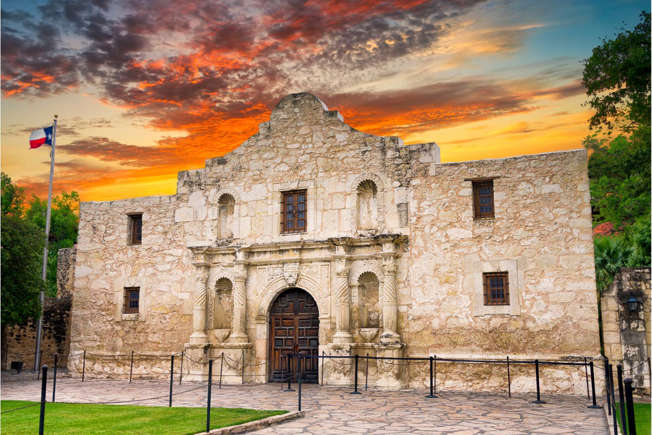
8. The Alamo – San Antonio, Texas, USA
Small in size but massive in spirit, The Alamo tells a story of courage and sacrifice.
Emily walked its stone courtyards, imagining the defenders who stood there in 1836 — outnumbered but unbroken.
That’s when she understood: some landmarks aren’t famous because of how they look, but because of what they represent.
9. The White House – Washington, D.C., USA
Standing outside the White House, Emily felt the weight of history.
Every president since John Adams had walked those halls, made decisions that shaped the world.
As tourists snapped selfies, Emily paused — realizing that this wasn’t just a home.
It was a symbol of leadership and democracy.
10. Hollywood Sign – Los Angeles, California, USA
Up in the hills, the white letters gleamed under the California sun — HOLLYWOOD.
It wasn’t just a sign. It was a dream.
Hiking up the trail, Emily thought about how this place had shaped global imagination — millions chasing stardom under those very letters.
When she reached the top, she smiled. Dreams, she realized, weren’t about fame — they were about believing you can make it.
11. Mount Denali – Alaska, USA
The snow glittered like diamonds under a blue sky.
Mount Denali, the tallest peak in North America, rose higher than clouds — silent, magnificent, untouched.
Emily had never seen anything so humbling.
It was as if the Earth itself was reminding her: “True greatness doesn’t need to shout.”
12. Hoover Dam – Nevada/Arizona, USA
Concrete meets might — that’s Hoover Dam.
Built during the Great Depression, it stands as a tribute to human determination.
As Emily walked along its rim, she marveled at how people in the 1930s built something so massive, without modern machines.
It was proof that when people unite, they can move mountains — or build them.
13. The Gateway Arch – St. Louis, Missouri, USA
In St. Louis, Emily craned her neck to see the Gateway Arch stretch gracefully toward the sky.
At 630 feet tall, it’s America’s tallest monument — and a symbol of westward exploration.
From its top, she looked out across the Mississippi River, feeling that same pioneering spirit that once pushed settlers west in search of new horizons.
14. The Space Needle – Seattle, Washington, USA
Rain drizzled softly as Emily ascended the Space Needle.
From 605 feet up, Seattle looked like a toy city below, the Pacific Northwest stretching endlessly beyond.
Coffee in hand, she watched clouds drift by and realized: sometimes the best perspective isn’t just high above — it’s looking inward.
15. Central Park – New York City, USA
In the middle of Manhattan’s chaos lies Central Park — 843 acres of calm, creativity, and connection.
Emily biked along its paths, passed street performers, and watched families picnic on the grass.
It wasn’t just a park. It was the lungs of a city that never sleeps.
16. The Las Vegas Strip – Nevada, USA
When night fell, the desert came alive.
The Las Vegas Strip glittered like a galaxy — fountains danced, lights flashed, and the air buzzed with possibility.
Emily wasn’t a gambler, but she loved the energy. Vegas wasn’t about luck — it was about living fully in the moment.
17. The French Quarter – New Orleans, Louisiana, USA
Jazz spilled out of every doorway, and the scent of gumbo and beignets filled the air.
In the French Quarter, time seemed to slow down.
Emily wandered its colorful streets, feeling the rhythm of history and heartache.
New Orleans wasn’t just a city — it was a living story, told through music, food, and soul.
18. The CN Tower – Toronto, Canada
Crossing into Canada, Emily stood beneath the CN Tower, once the tallest structure in the world.
She rode the elevator up — glass floor and all — and dared to look down.
Her heart raced, but she couldn’t stop smiling.
Sometimes, stepping outside your comfort zone is the best view of all.
19. Chichen Itza – Yucatán, Mexico
Under the blazing Mexican sun, the pyramid of Chichen Itza rose before her — an ancient wonder built by the Maya thousands of years ago.
Emily stood silently, tracing her fingers over the warm limestone.
Civilizations rise and fall, but their wisdom endures — carved into every stone.
20. Banff National Park – Alberta, Canada
Turquoise lakes, snow-dusted peaks, and quiet forests — Banff was pure magic.
Emily kayaked across Lake Louise, the water so clear it mirrored the sky.
Here, she found peace — the kind that only wild places can offer.
Banff whispered: “You don’t need Wi-Fi to connect.”
21. The Liberty Bell – Philadelphia, USA
Cracked but unbroken, the Liberty Bell stands as a symbol of independence and perseverance.
Emily read the words engraved on it — “Proclaim Liberty Throughout All the Land.”
She realized something beautiful: even when flawed, freedom is worth fighting for.
22. Glacier National Park – Montana, USA
Wildflowers bloomed beneath jagged mountains.
Glacier National Park was alive — roaring rivers, quiet lakes, and skies so clear they felt endless.
As Emily hiked the Going-to-the-Sun Road, she thought about how fragile beauty can be — and how vital it is to protect what we love.
23. Machu Picchu of the North – Mesa Verde, Colorado, USA
Hidden in cliffs, ancient Puebloan dwellings told stories of a civilization long gone.
At Mesa Verde, Emily felt like she’d stepped through time.
Every stone, every ladder carved into rock spoke of endurance, creativity, and connection to the earth.
24. The Brooklyn Bridge – New York City, USA
Back in New York, Emily walked across the Brooklyn Bridge at sunrise.
The city glowed in gold, the East River shimmered, and for a moment, time stood still.
She thought of how the bridge connected not just two boroughs — but generations of dreamers, builders, and believers.
25. Yosemite National Park – California, USA
Her final stop.
Yosemite — the crown jewel of America’s wild heart.
Waterfalls cascaded down granite cliffs, sequoias stood like ancient guardians, and stars blanketed the sky.
As she sat beneath El Capitan, Emily felt tears in her eyes.
This wasn’t just a trip. It was a pilgrimage — one that reminded her of how vast, beautiful, and alive this continent truly is.
Epilogue: The Soul of a Continent
When Emily returned home, her map was full of checkmarks — but her heart was full of stories.
Every landmark wasn’t just a destination; it was a lesson.
The Statue of Liberty taught her about hope.
The Grand Canyon taught her humility.
Banff taught her peace.
And together, they taught her this:
“You don’t have to travel the world to find wonder. Sometimes, it’s right here — in your own backyard.”
🏞️ Frequently Asked Questions (FAQs)
1. What’s the best time to visit North American landmarks?
Spring and fall are ideal for most destinations — milder weather, fewer crowds, and great scenery. Summer works for mountain parks, while winter is perfect for southern landmarks.
2. How long would it take to visit all 25 landmarks?
If you plan efficiently, around 3–4 months for a full North American road trip. But you can easily break it into regional adventures — East Coast, Midwest, West, and Canada/Mexico.
3. Are these landmarks family-friendly?
Yes! Most have activities suitable for all ages — from educational tours to outdoor adventures. National Parks even offer “Junior Ranger” programs for kids.
4. Do I need a passport for all these locations?
For U.S. landmarks, no. But for Canada (Niagara Falls, Banff, CN Tower) and Mexico (Chichen Itza), you’ll need a valid U.S. passport.
5. Which landmarks are most Instagram-worthy?
Top spots: Golden Gate Bridge, Banff, Niagara Falls, and Yosemite. But remember — the best photos are often the ones that capture your experience, not just the scenery.
6. Are these landmarks accessible year-round?
Most are, but weather plays a big role. Some parks (like Glacier or Yellowstone) have limited winter access. Always check seasonal openings before planning.
7. What’s one underrated landmark worth visiting?
Mesa Verde in Colorado — often overlooked, but hauntingly beautiful. It connects you to the deep roots of North America’s first civilizations.
8. How can I travel sustainably while visiting these places?
Choose eco-friendly lodgings, avoid single-use plastics, respect wildlife, and follow the “Leave No Trace” principles. Protecting these wonders ensures future generations can enjoy them too.
9. What’s the most emotional landmark to visit?
For many, The Alamo and The Liberty Bell evoke deep emotion — reminders of courage, struggle, and freedom.
10. Why should Americans explore their own continent first?
Because North America holds every kind of beauty imaginable — deserts, mountains, cities, coastlines, history, and heart.
Sometimes, the most life-changing adventure isn’t across the ocean — it’s across your own land.
🌄 Final Thought
You’ve seen the pictures, heard the names, maybe even dreamed of going “someday.”
But the truth is — the landmarks of North America aren’t waiting to be seen.
They’re waiting to change you.
So grab your keys, pack your camera, and hit the road.
Because the story of this continent — your continent — is still being written.
And maybe, just maybe, you’re meant to be part of it.