
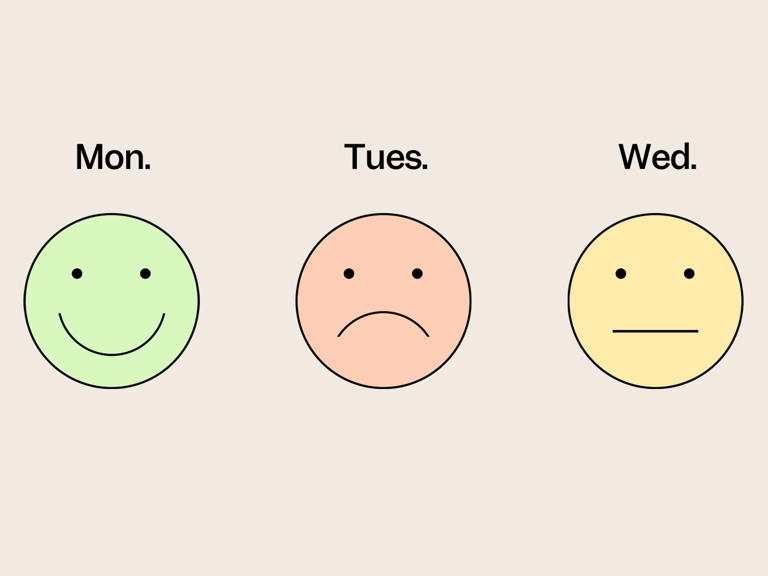
The Beginning of a Quiet Experiment
It started in a coffee shop in Portland on a rainy January morning.
I was sitting by the window, latte in hand, staring at the reflection of a life that looked fine on paper — a decent job, an apartment downtown, good friends — but inside, something felt off. I was going through the motions, but joy seemed… dulled.
That day, instead of doom-scrolling on my phone, I opened my notes app and typed three words:
Mood: 5/10.
It wasn’t meant to be a “project.” It was more of a confession — a quiet acknowledgment that I didn’t feel happy. But one line became two. Two became ten. And before I knew it, I was tracking my moods every single day.
What began as a five-minute journaling exercise turned into a five-year emotional data journey — one that revealed patterns, surprises, and ultimately, one simple habit that completely transformed my life.
📊 Year One: The Emotional Rollercoaster
The first year was messy. I’d wake up and jot down a number from 1 to 10, sometimes adding a word or two.
“Mood: 4/10. Tired. Overwhelmed.”
“Mood: 8/10. Great talk with Mom.”
“Mood: 3/10. Bad sleep. Overthinking.”
Within months, patterns emerged. My mood wasn’t random at all — it was predictably reactive.
Bad weather? Lower moods.
Late nights? Grumpier mornings.
Meaningful conversations? Instant mood lift.
But the biggest insight came from what didn’t change: despite vacations, pay raises, or weekend plans, my baseline happiness hovered around a 6/10. It was stable — but stagnant.
🧠 Year Two: The Self-Awareness Breakthrough
Around month 14, I started noticing emotional “triggers.” Certain people drained me. Certain habits (like endless social media scrolling) made me restless. And days when I exercised or spent time outside almost always rated higher.
I realized that mood tracking wasn’t about control — it was about awareness.
I wasn’t just logging feelings anymore. I was observing them. Like a scientist studying a storm, I was learning where the thunder came from.
But still — my mood graph looked like a heartbeat monitor: up, down, up, down.
Something deeper had to change.
🌤️ Year Three: The Habit That Changed Everything
It happened accidentally.
One Sunday morning, feeling aimless, I wrote down three good things that happened that week — a sunny walk, a funny text, and the smell of cinnamon rolls from the bakery downstairs.
The next day, I did it again. And the next. And then the next.
Within a month, something shifted.
My mood ratings rose — not dramatically, but steadily. 6’s became 7’s. 7’s turned into 8’s. And soon, I realized that the simple act of writing gratitude entries was rewiring how I saw my life.
It wasn’t toxic positivity. I wasn’t ignoring bad days. I was just retraining my brain to notice what was still good — the cup of coffee that tasted right, the unexpected compliment, the soft light through the blinds.
That was the habit that changed everything.
💛 The Science of Gratitude (and Why It Works So Fast)
When you practice gratitude regularly, your brain starts seeking positives the same way it once hunted for negatives. It’s like upgrading your mental radar.
At first, I had to force myself to find something to be grateful for. But soon, I’d wake up thinking: “What small joy will I write down tonight?”
Gratitude became my daily filter.
It didn’t erase problems — it just changed their size.
A tough day at work felt less like a disaster and more like a blip. A missed promotion became an opportunity to grow. And that’s when I realized: I wasn’t just tracking moods anymore — I was shaping them.
🕰️ Year Four: The Ripple Effect
By the fourth year, the benefits of that one habit had started spreading into other areas of my life.
I noticed I was more patient with people.
More forgiving with myself.
And surprisingly — more adventurous.
When you feel grateful, you become less afraid of life’s uncertainties. You trust that even if things go wrong, there will still be something right.
That mindset made me take small risks: joining a hiking group, taking a solo trip to Colorado, even starting therapy. Each one added another layer of joy, resilience, and meaning.
🌙 Year Five: What True Happiness Looks Like
By the time I hit year five, I had thousands of data points — each one a snapshot of my emotional world.
Looking back, I could see it clearly:
Gratitude wasn’t a “feel-good” gimmick. It was a discipline. A lens that sharpened my focus on what mattered most.
My average mood score? It had climbed from a 6 to an 8.
But more importantly, the highs and lows weren’t so extreme anymore. My emotional waves had turned into calm tides. I didn’t feel euphoric every day — I just felt content. Grounded. Whole.
That was real happiness — not the fleeting kind that depends on circumstances, but the steady kind that grows quietly inside you.
🪞What I Learned From 5 Years of Mood Tracking
Here’s the truth that five years of data taught me — happiness isn’t about big moments. It’s about tiny consistencies.
It’s in the way you greet the morning.
It’s in how you talk to yourself when no one’s listening.
It’s in whether you choose to notice beauty when life feels heavy.
Tracking my moods gave me the awareness.
Practicing gratitude gave me the transformation.
And together, they gave me something priceless: the ability to create joy on purpose.
🌿 The One-Minute Happiness Habit (That Anyone Can Start Today)
If you want to try this yourself, here’s how to begin:
-
Pick a simple system.
Use a notebook, app, or even your Notes on your phone. The key is consistency, not complexity. -
Every night, rate your mood from 1–10.
Don’t overthink it — go with your gut feeling. -
Write down three things you’re grateful for.
They can be big (“got a promotion”) or small (“my coffee was perfect”). -
Add one short reflection.
“What made today better or worse?” Over time, you’ll see patterns emerge. -
Check your averages every few weeks.
You’ll be amazed how small daily choices influence your emotional well-being.
After a few months, you’ll start to see what truly nourishes you — and what drains you. That awareness alone is life-changing.
✨ A Realization I Didn’t Expect
Five years ago, I thought happiness was a destination — something I’d reach once life was “perfect.”
Now I know it’s a practice.
Happiness isn’t waiting on the other side of success, love, or money. It’s built quietly through small, intentional acts of noticing.
Sometimes, I look back at my first entry — Mood: 5/10. Tired. Overwhelmed.
If I could talk to that version of me, I’d say:
“Keep going. You’re about to meet a calmer, kinder version of yourself — one gratitude list at a time.”
🌻 FAQs: Mood Tracking & Happiness
Q1: How long does it take for gratitude to make a difference?
Most people notice a shift within a few weeks. It starts subtly — you just feel lighter, more appreciative, and less reactive to stress.
Q2: What if I forget to track some days?
That’s okay! The goal is awareness, not perfection. Even a few entries a week will reveal valuable insights.
Q3: Can I still track moods if I struggle with mental health issues?
Absolutely. In fact, it can help you identify triggers, track progress, and communicate better with your therapist.
Q4: What’s the best time to write gratitude entries?
Nighttime works best for most people. Reflecting on your day before bed helps your brain end the day with positive reinforcement.
Q5: Is gratitude journaling the only way to boost happiness?
No, but it’s one of the simplest and most evidence-backed. Combine it with exercise, good sleep, and meaningful relationships for even greater impact.
🌈 Final Thought
You don’t need a perfect life to feel happy.
You just need to notice the parts of life that already are perfect — even for a moment.
Happiness, it turns out, isn’t found at the end of a five-year experiment.
It’s written in the small notes you leave for yourself along the way.