The human eye is nothing short of a biological masterpiece. Often celebrated as the window to the soul, it is, in pure engineering terms, the body’s most complex organ after the brain itself. Composed of over two million intricate working parts—from the light-sensitive rods and cones of the retina to the flexible crystalline lens that focuses in a fraction of a second—the eye is a perpetual motion machine of perception. It’s estimated that a staggering 80% of all our learning is processed through our vision, shaping our understanding of the world from the moment we first open our eyes as infants.
Given this immense responsibility, the question isn’t just how we see, but how we can protect this incredible gift. What are the daily habits that safeguard our sight, and what are the seemingly innocent mistakes that could jeopardize it for a lifetime?
To find the answers, we—Raj Punjabi and Noah Michelson, hosts of HuffPost’s “Am I Doing It Wrong?” podcast—sat down with a true expert: Dr. Amanda Redfern, an ophthalmologist and assistant professor at the prestigious Oregon Health & Science University’s Casey Eye Institute. Her insights were both enlightening and, at times, startlingly direct.
The Cardinal Sin of Eye Care: Sleeping in Your Contacts
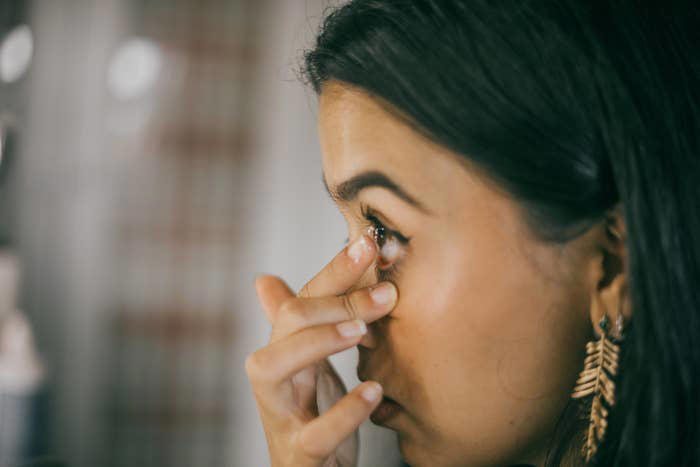
We’ve all been there—exhausted after a long day, the thought of meticulously removing contact lenses feels like a Herculean task. But according to Dr. Redfern, succumbing to that temptation is one of the most dangerous things you can do for your ocular health.
“[Sleeping with contact lenses in your eyes] is bad. It’s real bad. Don’t do it,” Redfern stated unequivocally. And this warning isn’t just for a full night’s rest. She emphasized that it even applies to short naps. “It’s like a game of Russian roulette.”
But why is it so perilous? The cornea, the clear, dome-shaped front surface of your eye, is unique in that it has no blood vessels. It gets its oxygen directly from the air. Contact lenses, even the modern “breathable” ones, act as a barrier, reducing the oxygen supply. When you close your eyelids to sleep, you further limit that oxygen. This creates a perfect storm: a oxygen-deprived cornea trapped under a plastic lens, making it incredibly vulnerable to infection.
The most severe consequence is a corneal ulcer, which is an open sore on the cornea caused by a bacterial, viral, or fungal infection.
“It’s not going to happen every time, but when it happens, it’s terrible,” Redfern explained. “It can be so bad you could, in really terrible cases, lose your eyeball.”
The imagery is stark for a reason. Corneal ulcers are medical emergencies that can lead to permanent vision loss, scarring, and in the most extreme, untreated cases, the loss of the eye itself. Even in less severe situations, the outcome can be life-altering.
“You could end up with a scar on your cornea,” Redfern said. “If that scar is in the center of your vision, that could affect your vision permanently, unless you get a corneal transplant.”
Beyond Sleep: The Hidden Dangers of Water and Lenses
Dr. Redfern’s warnings extend far beyond the bedroom. She cautions against any activity that could compromise the sterility of contact lenses, creating a broad category of “don’ts” that many wearers might overlook.
1. Swimming and Showering: Whether it’s a chlorinated pool, a freshwater lake, or the saltwater ocean, water is a contact lens wearer’s enemy. The same goes for the steam and water of your daily shower.
* The Problem: Water, even treated tap water, is not sterile. It is teeming with microorganisms, including Acanthamoeba, a notoriously difficult-to-treat parasite that can cause a severe and painful infection called Acanthamoeba keratitis. This infection is so resilient that treatment can last for a year or more and often leads to permanent visual impairment.
* The Mechanism: “The problem with contact lenses is that it will sandwich bacteria between the lens and your cornea,” Redfern explained. The lens traps these harmful agents against the surface of your eye, giving them a direct pathway to cause an infection.
2. Using Tap Water as a Substitute: In a pinch, it might be tempting to rinse your lens case or even store your lenses in a bit of tap water. This is a grave error.
* The Verdict: “In general, we frown upon anything where your eye is going to be exposed to something nonsterile,” Redfern said. Only the manufacturer’s recommended disinfecting solution is designed to kill pathogens and keep your lenses safe for wear.
We posed a classic traveler’s dilemma to Dr. Redfern: What if you’re on vacation and forgot your contact solution? Is it better to sleep in them for one night or use tap water to store them?
Her response was swift and left no room for negotiation. “Both of those are awful options… I’d rather you [throw the contacts out] and just walk around a little bit blurry for the weekend.”
Her advice underscores a critical principle in eye care: when in doubt, prioritize safety over convenience. A weekend of slightly blurry vision is a minor inconvenience compared to the potential of a lifelong, vision-threatening condition.
The Proactive Shield: Embracing Eye Protection
While Dr. Redfern was clear on what not to do, she was equally passionate about a simple, proactive habit that could prevent countless eye injuries: wearing protective eyewear.
“I always wear eye protection if I’m doing a house project where I’m hammering, sawing — anything where something can fly at my eye,” she shared. “Always wear eye protection, because I actually spend half my time seeing hospital consults and the trauma that you see is just crazy.”
This isn’t just advice for professional construction workers. It applies to everyone engaging in activities like:
-
Home Improvement: Drilling, sanding, using power tools.
-
Gardening and Yard Work: Trimming branches, using a weed whacker.
-
Sports: Racquetball, squash, basketball, hockey.
-
Chemical Use: Cleaning with bleach or other harsh chemicals.
A pair of inexpensive, ANSI-approved safety glasses can be the difference between a finished project and a trip to the emergency room.
What to Do in an Eye Emergency
Accidents happen, even to the most cautious among us. Dr. Redfern provided crucial advice for a worst-case scenario: if you get something lodged in your eye.
The instinct is to rub it or try to pull it out. Do not do this.
“Pulling it out in an uncontrolled fashion [could cause] the inner contents of the eye to come out with it,” she warned. An object embedded in the eye may be acting as a plug, preventing the vitreous humor (the gel-like substance inside the eye) from leaking out.
Instead, follow these steps:
-
Do not rub or press on the eye.
-
Stabilize the object. Take a paper or plastic cup and gently place it over the injured eye, ensuring it doesn’t touch the object itself.
-
Secure the cup. Use tape to hold the cup in place over your eyebrow and cheekbone.
-
Seek immediate medical attention. Go to the nearest emergency room or an eye trauma center immediately. Do not delay.
A Holistic Approach to Lifelong Eye Health
Beyond avoiding dangers and wearing protection, maintaining healthy eyes is a lifelong journey. Here are other essential practices:
-
Get Regular Comprehensive Dilated Eye Exams: Many sight-threatening diseases, like glaucoma, diabetic retinopathy, and macular degeneration, have no early warning signs. A dilated eye exam is the only way for an eye care professional to fully examine the health of your retina and optic nerve.
-
Wear Sunglasses with UV Protection: Ultraviolet (UV) rays from the sun can contribute to cataracts and macular degeneration. Choose sunglasses that block 99% to 100% of both UVA and UVB radiation.
-
Eat a Vision-Healthy Diet: Nutrients like Lutein, Zeaxanthin, Vitamin C, Vitamin E, and Omega-3 fatty acids are vital for eye health. Load up on leafy greens (spinach, kale), citrus fruits, nuts, and fatty fish.
-
Practice the 20-20-20 Rule: For every 20 minutes spent looking at a screen, look at something 20 feet away for at least 20 seconds. This helps reduce digital eye strain, which can cause blurry vision, headaches, and dry eyes.
-
Quit Smoking: Smoking significantly increases your risk of developing cataracts, optic nerve damage, and macular degeneration.
Our eyes are a wondrous, irreplaceable gift. By heeding the expert advice of professionals like Dr. Amanda Redfern—saying no to sleeping in contacts, avoiding water exposure, embracing protective gear, and adopting healthy daily habits—we can take proactive steps to ensure our vision remains clear and healthy for a lifetime.
Frequently Asked Questions (FAQ) About Eye Health
Q1: Are “extended wear” contact lenses safe for overnight use?
While some contact lenses are FDA-approved for extended wear, including overnight, Dr. Redfern and most ophthalmologists still consider it a significant risk. Even these lenses reduce oxygen to the cornea, increasing the chance of infection. It’s always safer to remove your lenses before sleep, regardless of the type.
Q2: Is it really that bad to use saliva to moisten a dry contact lens?
Yes, absolutely. Your mouth is full of bacteria that are not meant to be introduced directly to your eye. Doing so can lead to serious infections. Only use sterile, recommended rewetting drops designed for contact lenses.
Q3: How often should I replace my contact lens case?
You should replace your contact lens case at least every three months. However, many eye doctors recommend a monthly replacement for optimal hygiene. Rinse it daily with fresh solution (never water) and let it air-dry face down on a clean tissue.
Q4: Can blue light from screens really damage my eyes?
While digital screens can cause eye strain, headaches, and dry eyes, there is currently no conclusive scientific evidence that the amount of blue light emitted from digital devices causes permanent damage to the retina. The 20-20-20 rule is the best defense against the discomfort of digital eye strain.
Q5: What’s the difference between an ophthalmologist, an optometrist, and an optician?
-
Ophthalmologist: A medical doctor (MD or DO) who specializes in all aspects of eye care, including performing surgery, diagnosing and treating complex diseases, and prescribing glasses and contacts. (e.g., Dr. Redfern).
-
Optometrist: A doctor of optometry (OD) who provides primary vision care, including sight testing, prescribing corrective lenses, diagnosing common eye diseases, and sometimes prescribing medications.
-
Optician: A technical professional who fits, adjusts, and dispenses glasses and contact lenses based on prescriptions from ophthalmologists or optometrists.
Q6: If I have 20/20 vision, do I still need an eye exam?
Yes. 20/20 vision only means you see clearly at a distance. A comprehensive eye exam checks for much more, including eye focusing ability, common eye diseases (like glaucoma, which has no early symptoms), and overall health conditions that can manifest in the eyes, such as diabetes and high blood pressure.
Q7: Are carrots really the best food for your eyes?
Carrots are good because they contain Vitamin A, which is essential for vision. However, dark leafy greens like spinach and kale are even better as they contain Lutein and Zeaxanthin, antioxidants that help protect the macula from damage by blue light. A balanced diet is key.