
My journey into the world of food chemistry began not in a lab, but on a Tuesday, in the middle of my yoga class, right in the middle of a very wobbly downward-facing dog.
It was my friend, Clara. One moment she was a picture of zen, and the next, she’d collapsed onto her mat, a low groan escaping her lips. “Cramps,” she whispered, her face pale. “It’s like there’s a tiny, angry badger in my stomach.”
Later, over a cup of ginger tea, we played detective. What had she eaten? Her breakfast was a portrait of American health: a powerful green smoothie, packed with spinach, banana, a hefty scoop of chia seeds, and a generous handful of raw almonds for protein. It was the kind of meal you’d see on a wellness influencer’s Instagram, a vibrant green elixir promising vitality and clean energy.
Yet, for Clara, it promised only bloat and discomfort.
This sent me down a rabbit hole. I spoke with a nutritionist, delved into Ayurvedic principles, and scoured scientific journals. I discovered that our modern approach to food is often one of enthusiastic, but misguided, abundance. We throw every “superfood” we know into a blender, believing that if one is good, five must be better. But food, I learned, has a social life. Some ingredients are best friends, enhancing each other’s virtues. Others are like oil and water, or worse, like two guests at a party who start a fight that ruins the evening for everyone.
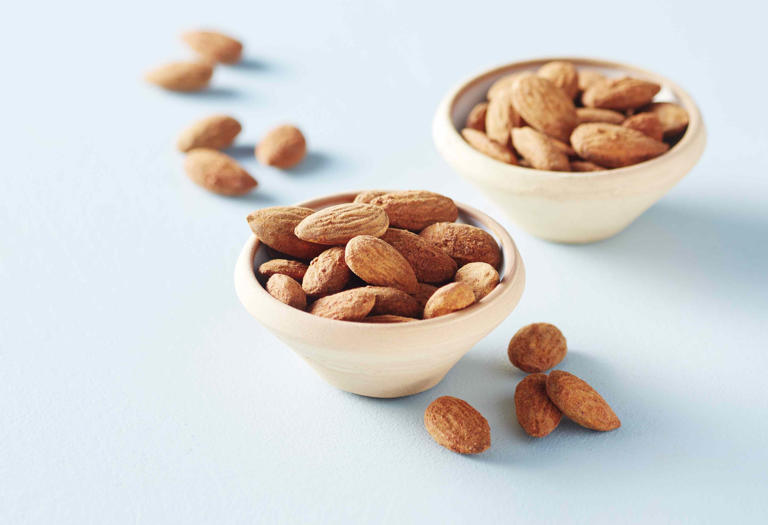
And the humble almond, that paragon of health, can be a particularly finicky guest. Here are the five foods you might want to think twice about mixing with your daily handful of almonds.
1. The High-Oxalate Alliance: Almonds & Spinach (The Kidney Stone Conspiracy)
The Story of the “Superfood” Smoothie Sabotage
This was Clara’s culprit. On the surface, almonds and spinach are the power couple of the health world. Spinach is iron-rich and packed with vitamins; almonds are a source of good fats and protein. But beneath the surface, they share a secret, and less desirable, bond: they are both exceptionally high in compounds called oxalates.
Think of oxalates as tiny, sharp crystals. In moderate amounts, your body can process them just fine. But when you consume a large dose of high-oxalate foods all at once—like a big handful of raw almonds and two cups of raw spinach in a smoothie—you’re essentially flooding your system. For some people, particularly those prone to kidney stones, these oxalates can bind with calcium in the urine to form calcium oxalate stones, the most common type of kidney stone.
It’s not that almonds or spinach are bad. It’s the concentration and combination that creates the problem. You’re doubling down on a compound that, in excess, can cause issues.
The Better Way: If you love your green smoothie, don’t despair. Balance is key. Use cooked spinach instead of raw (cooking reduces oxalate content) or rotate your greens. Swap spinach for lower-oxalate options like kale or romaine lettuce. And most importantly, ensure you’re drinking plenty of water throughout the day to help flush out any excess oxalates.
2. The Phytate Phalanx: Almonds & High-Caffeine Tea (The Mineral Blockade)
The Story of the Mid-Morning Slump
Imagine this classic American ritual: a healthy desk snack of almonds and a steaming cup of black tea or coffee to power through the 10 AM slump. It feels productive, virtuous even. But in your digestive tract, a silent heist is taking place.
Almonds, like many nuts and seeds, contain phytic acid. This is a natural compound that plants use to store phosphorus. In our bodies, phytic acid is known as an “anti-nutrient” because it can bind to minerals like iron, zinc, and calcium in your digestive tract, preventing their absorption.
Now, bring in the high-tannin tea or coffee. Tannins are astringent compounds that also have a strong binding affinity for iron, particularly non-heme iron (the kind found in plants).
So, when you consume almonds and a strong cup of tea together, you’re creating a powerful double-blockade. The phytic acid from the almonds and the tannins from the tea join forces, significantly reducing your body’s ability to absorb the very minerals you’re trying to consume. You’re eating the iron, but you’re not getting its benefits.
The Better Way: Timing is everything. Enjoy your almonds as a standalone snack. If you’re having a meal rich in iron (like a lentil salad or fortified oatmeal), have your tea or coffee at least an hour before or after. This gives your body a fighting chance to absorb the precious minerals without interference.
3. The Starch & Protein Tug-of-War: Almonds & Bananas (The Digestive Traffic Jam)
The Story of the Pre-Workout Pitfall
The almond butter and banana sandwich is a staple for athletes and busy parents alike. It’s quick, portable, and seems like a perfect blend of energy and protein. But for many, this combo can lead to a feeling of heaviness, bloating, and sluggishness.
This is where we venture into the principles of food combining, a concept popular in Ayurveda and other traditional medicine systems. The theory suggests that different food types require different digestive environments and enzymes.
-
Starches (like bananas) require an alkaline environment to begin digestion.
-
Proteins and Fats (like almonds) require a highly acidic environment in the stomach.
The argument is that when you eat them together, the body secretes both acid and alkaline enzymes, which can neutralize each other and slow down the entire digestive process. It’s like trying to drive with one foot on the gas and the other on the brake. The conflicting signals can cause food to sit in the stomach for too long, leading to fermentation, gas, and bloating.
While modern science hasn’t fully embraced all tenets of food combining, many people anecdotally report significant digestive relief when they separate dense proteins and starches.
The Better Way: This isn’t to say you must never have almond butter with a banana again. But if you frequently experience post-meal discomfort with this combo, try an experiment. Eat the banana before your workout for quick energy, and have the almonds or almond butter afterwards for muscle repair. Listen to your body; it’s the best guide you have.
4. The Citrus Clash: Almonds & Oranges (The Acidic Overload)
The Story of the “Refreshing” Trail Mix Regret
I once made a “gourmet” trail mix for a hiking trip: almonds, dried cranberries, dark chocolate, and a generous amount of dried orange slices. It looked beautiful. It tasted bright and tangy. And it left our entire hiking party with a vague, unpleasant heartburn.
The issue here is one of acidic overload. Almonds, while containing healthy fats, are themselves mildly acidic. Citrus fruits like oranges, grapefruits, and lemons are highly acidic.
For most people with robust digestive systems, this isn’t a major issue. But for those with sensitive stomachs or conditions like GERD (Gastroesophageal Reflux Disease), combining two acidic foods can be a recipe for disaster. The high acid content can irritate the stomach lining and relax the lower esophageal sphincter, allowing stomach acid to splash up into the esophagus, causing that familiar burning sensation.
It’s like adding fuel to a fire that’s already smoldering.
The Better Way: If you love the almond-citrus flavor profile but have a sensitive stomach, space them out. Enjoy your almonds as a snack, and have your orange an hour or so later. Alternatively, use a small amount of citrus zest for flavor without the acidic juice punch.
5. The Dairy Duet: Almonds & Milk (A Mismatch of Messengers)
The Story of the “Healthy” Latte and Granola
This one is the most subtle and relates more to your body’s hormonal response than direct digestive conflict. The classic image of granola with milk and almonds, or an almond croissant with a latte, seems innocuous. But from a metabolic perspective, it’s a confusing signal.
Almonds and dairy (like cow’s milk) are both excellent sources of protein and fat. However, they send different messages to your body.
-
Dairy protein, specifically casein, is known for being “slow-digesting,” providing a steady, slow release of amino acids. It’s often recommended at night for this reason.
-
The fat and fiber in almonds also contribute to a feeling of sustained fullness and slow-burning energy.
Combining two slow-digesting, high-fat, high-protein foods can be incredibly heavy for the system. It’s a metabolic marathon, not a sprint. For some, this can lead to that familiar feeling of being “stuffed,” sluggish, and mentally foggy after a meal. You’ve given your body a massive, complex job to do, and it’s diverting all its energy to the task.
The Better Way: This is about considering the purpose of your meal. If you need quick, accessible energy in the morning, a heavy almond-and-dairy combo might weigh you down. Consider lighter pairings, like almonds with a piece of fruit, or dairy with a complex carbohydrate. If you’re having a rich almond-based meal, perhaps choose a non-dairy element to accompany it to avoid the digestive logjam.
The Final Bite: It’s About Symphony, Not Noise
My friend Clara didn’t give up her smoothies. She just became a better conductor of her ingredients. She now uses almond butter (often made from blanched almonds, which can be lower in oxalates) instead of whole raw almonds, pairs it with low-oxalate Swiss chard, and has her morning tea after she’s finished her smoothie and started her workday.
The goal isn’t to live in fear of food combinations. It’s to move away from the modern fallacy of “more is more” and toward an understanding of harmony. Food is information. Each ingredient carries a message for your body. By being mindful of how these messages interact, we can move from simply eating to truly nourishing ourselves, creating a symphony in our digestive system instead of a cacophony.
So, the next time you reach for that handful of almonds, pause for just a second. Ask yourself: who are its friends today? And who might be its frenemies? Your gut will thank you for the consideration.
Frequently Asked Questions (FAQs)
Q1: I’ve been eating almonds with these foods for years and feel fine. Should I be worried?
Not at all! This is the most important point. These combinations are potential triggers for sensitive individuals or for people consuming these foods in very large, concentrated amounts. If you have a robust digestive system and experience no discomfort, there is no need to change a routine that works for you. This information is a tool for troubleshooting, not a set of strict rules.
Q2: Are there any foods that pair especially well with almonds?
Absolutely. Think about balance. Almonds pair wonderfully with:
-
Soaking or Blanching: Soaking raw almonds overnight in water can significantly reduce their phytic acid and enzyme inhibitor content, making them easier to digest and their nutrients more bioavailable.
-
Sweet Fruits: Apples, pears, and berries have different digestive pathways and make for a light, energizing snack with almonds.
-
Spices: Cinnamon, turmeric, and cardamom not only complement the flavor of almonds but also possess their own digestive-aiding properties.
Q3: What about almond milk? Do these combinations apply to it as well?
Almond milk is generally much less concentrated than whole almonds, so the effects are significantly diluted. However, if you have a specific sensitivity (like to oxalates), it’s worth checking if your almond milk is made from whole almonds (higher oxalate) or blanched almonds (lower oxalate). The pairing with high-tannin tea would be less of an issue with almond milk.
Q4: Is this “food combining” philosophy scientifically proven?
It’s a area of debate. While specific mechanisms like the mineral-blocking effects of phytates and tannins are well-documented in nutritional science, the broader concept of food combining (like not mixing proteins and starches) lacks robust, large-scale clinical trials. However, the proof is often in the pudding—or in this case, the lack of digestive discomfort. Many people find immense relief by following these principles, making it a valuable experiential tool, even if the science is still catching up.
Q5: Should I stop eating raw almonds altogether?
No. Raw almonds are a nutritious food. The key, as with all things in nutrition, is variety and preparation. Don’t rely on raw almonds as your only nut. Rotate with walnuts, pecans, and macadamia nuts. And consider soaking and dehydrating your raw almonds at home. This simple process can deactivate the enzyme inhibitors and reduce phytic acid, making them a much more digestible and nutrient-friendly snack.