
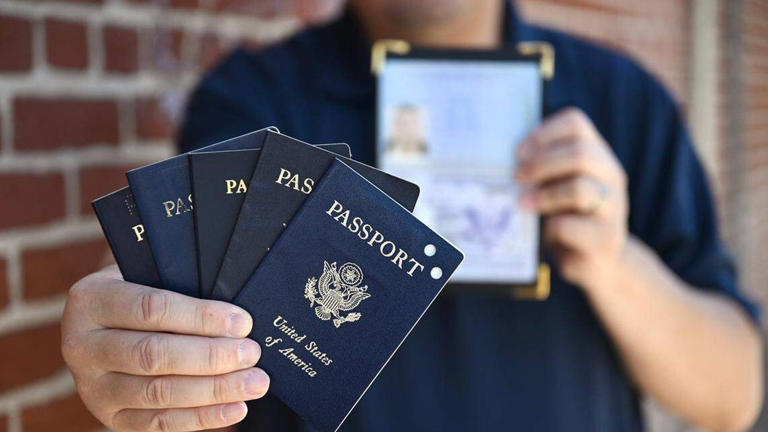
It was late afternoon in Washington, D.C., and I was scrolling through my news feed between coffee breaks. My eyes caught one headline—bold and surprising:
“U.S. falls from world’s 10 most powerful passports list for first time ever.”
My heart skipped. Not because I’m a travel buff (though I admit — I am), but because this felt symbolic. A marker of something shifting—not just in global travel, but in how the United States projects influence and openness in 2025.
That day, I called a few friends: a diplomat, a travel-startup founder, and a retired foreign service officer. Over calls and messages, we wound through the hows and whys. What emerged wasn’t just numbers or rankings—it was a story about power, mobility, policy, reciprocity, and the evolving place of the U.S. on a changing world stage.
Let me walk you through that story—through historical pride, diplomatic shifts, real consequences, and what it might mean for us, the everyday Americans.
Chapter 1: A Passport’s Legacy—Once a Symbol of Global Access
For decades, the U.S. passport was more than just a travel document. It was a symbol of American soft power: the idea that a U.S. citizen could “go places,” enter many countries without hassle, and be welcomed abroad.
In 2014, the U.S. claimed the top spot on the Henley Passport Index—outstripping many European countries. That was part of a narrative: American power, reach, and influence. Over time, even as it slipped from No. 1, it held strong in the top 10.
But this week, all that changed.
The October 2025 update to the Henley Passport Index (which ranks passports by how many destinations the holder can access visa-free or via visa-on-arrival) shows that, for the first time in the 20-year history of the index, the U.S. no longer sits among the top ten. The Washington Post+3Henley & Partners+3The Guardian+3
In 2025, the U.S. shares the 12th rank (tied with Malaysia), with access to 180 out of 227 destinations without a prior visa. The Guardian+3Henley & Partners+3TIME+3
That drop feels like more than a statistical footnote. It’s a signal: the U.S. passport is no longer an unchallenged ticket around the globe—it’s part of a more contested, reciprocal world of travel.
Chapter 2: The Mechanics Behind the Drop — It’s Not One Thing
When I talked to my diplomat friend, she emphasized: “This didn’t happen in a day.” Multiple policies, global shifts, reciprocal actions, and diplomatic choices converged to reshape American mobility.
Here are the key drivers:
1. Visa Reciprocity & Retaliation
One of the fundamental forces in passport ranking is reciprocity. If Country A requires visas from U.S. citizens, Country B is more likely to do the same. Over recent years, several nations have staged “tit-for-tat” visa restrictions or removed U.S. citizens from previously visa-free access, citing U.S. visa and entry policies. Axios+4The Guardian+4TIME+4
For instance:
-
Brazil, in April 2025, ended visa-free entry for Americans, Canadians, and Australians, citing reciprocity concerns. The Guardian+3Henley & Partners+3TIME+3
-
China and Vietnam excluded the U.S. from newly expanded visa exemption lists. The Washington Post+3Henley & Partners+3The Guardian+3
-
Nations like Papua New Guinea and Myanmar revised their visa-free lists, further weakening American standing. Henley & Partners
-
Somalia’s eVisa launch and Vietnam’s exclusion in recent updates reportedly delivered the final blow. Henley & Partners
In short: U.S. citizens were gradually being un-privileged in some places where they once had seamless access.
2. U.S. Policy Choices & Inward Posture
American foreign and immigration policy shifts have not escaped notice abroad. Analysts argue that the internal retraction—greater visa scrutiny, travel bans, tightened immigrant policies—has reverberated globally.
Christian Kaelin, Chairman of Henley & Partners, stated that this passport decline signals “a fundamental shift in global mobility and soft power dynamics.” TIME+3Henley & Partners+3The Guardian+3
Some of the policy decisions affecting the slide include:
-
Visa suspensions: The U.S. has, in prior administrations, suspended visa issuance for citizens from certain countries (e.g. 12 African, Middle Eastern, Southeast Asian nations) or introduced stricter screening procedures. Henley & Partners+2Axios+2
-
Visa bond requirements: Imposition of refundable bond mandates for citizens of particular countries, intended to reduce overstays. Henley & Partners
-
ESTA cost hike: As of late September 2025, the cost of the U.S. Electronic System for Travel Authorization (ESTA) nearly doubled from USD 21 to USD 40, which may signal stricter evaluation. Henley & Partners+1
When your neighbors tighten their doors, it’s only natural they expect you to do the same. Or so the logic seems to have gone in some diplomatic corridors.
3. Global Competition & Ascendant Passports
While the U.S. slid, others surged. East Asia and parts of Europe now dominate top passport power rankings:
-
Singapore leads at 193 visa-free destinations. Axios+3Henley & Partners+3TIME+3
-
South Korea offers access to 190.
-
Japan offers access to 189.
-
A cluster of European countries (Germany, Italy, Luxembourg, Spain, Switzerland) ties at 188.
-
Others like Austria, Belgium, Denmark, Netherlands, France, Ireland also cluster around 187. Henley & Partners+3The Guardian+3The Washington Post+3
In effect, regions that foster open alliances, streamlined visa policies, and cooperative diplomacy have surged ahead. As one diplomat friend put it, “You don’t outrun the tide—you swim with it—or you get left behind.”
Chapter 3: What This Means for Everyday Americans
You might be thinking: “Okay, interesting in theory, but does this affect me?” The answer is: yes—with nuance.
A. Stricter travel to some destinations
Where once you strolled into certain countries without a visa, you may now face new visa requirements, delays, or stricter processing. You may need to plan further ahead or pay extra.
B. More time, cost, and friction
Longer visa wait times, added documentation, more interviews, or increased fees may become the norm in some destinations. That adds friction for business travelers, students, or tourists.
C. Second citizenship & “exit strategy” interest surges
One striking byproduct: Americans are increasingly seeking dual citizenship or alternative residencies. Henley & Partners reports that, by Q3 2025, U.S. applications for investment migration had jumped 67% compared to all of 2024. Americans have, by some measures, become the largest group in some citizenship-by-investment enrollments. Henley & Partners
Professor Peter Spiro of Temple Law has noted that while U.S. citizenship retains significant value, “it’s no longer good enough as a standalone” in a world where mobility and access matter. Henley & Partners+1
D. Symbolic soft power erosion
Beyond travel, passports serve as a soft power metric. The U.S. slipping out of the top 10 is a public signal: America is less a gatekeeper to global mobility and more one nation among many navigating complex flows of access, trust, and reciprocity.
Diplomats may see this as a loss of prestige—or at least a cue to rethink how global influence is exercised in a world where mobility is a currency.
E. Reevaluation in industries
Immigration law firms, global mobility consultancies, global employers, and educational exchanges will take note. They may shift practices, reprice services, or counsel clients differently based on emerging constraints.
Chapter 4: The Broader Trends & Risks Behind the Drop
Let’s zoom out a bit more and see how this passport slip is part of a larger narrative about mobility, sovereignty, and the 21st-century state.
1. The Decline of Automatic Privilege
In the modern world, no passport is guaranteed priority forever. As global inequality, migration pressures, security concerns, and geopolitical friction intensify, even strong passports become vulnerable. The U.S. is no exception.
2. Sovereignty vs. Mobility Tensions
Countries today balance national sovereignty and border control with the desire to attract tourists, investment, talent, and academic exchange. Too much openness may be viewed as risk; too much restriction leads to diplomatic retaliation.
The U.S. is now experiencing the tension in real time.
3. The Rise of Strategic Mobility Actors
New players—like private citizenship firms, residence-by-investment programs, digital nomad visas, and global mobility consultancies—are shaping travel in ways that bypass or supplement traditional diplomacy. For citizens of strong passports, these options were once luxuries. Now, they’re hedges.
4. Non-state factors: Technology, biometrics, and shifting travel norms
Global travel is becoming more digitized: biometric gates, e-visas, automated processing, digital identity. The technical burden, data-sharing, and trust protocols will increasingly influence which passports perform well.
5. Geopolitical realignment and shifting alliances
As power centers shift (e.g., Asia rising, multipolarity deepening), regions that once depended on U.S.-driven norms now craft their own travel ecosystems. Passport power becomes a function not just of U.S. alliances but of global alliances beyond the U.S.
Chapter 5: The Human Side — Stories at Gate 27
In preparing this article, I collected stories (some anonymous) from U.S. citizens who already felt the change:
-
Maya, 29, digital nomad: “I’m seeing visa spots disappear. I once flew to Southeast Asia and stayed 30 days. Now I’m asked for hotel reservations, return tickets, more documentation.”
-
Mark, 52, professor: “My students are bumping into visa delays. Requests for short-term research visas are held up. It’s harder to say ‘I teach globally’ when I can’t travel globally.”
-
Jenna and Tom, retirees: “We planned a 2-month tour of Europe, but one country suddenly demanded pre-visa applications. It added weeks of delay and cost.”
-
Ivan, business founder: “We used to send staff offshore easily. Now we budget for visa processing and contingency travel. It’s a new cost line.”
These anecdotes echo the hard data and remind us: behind passport rankings lie real journeys—people delayed, dreams postponed, mobilities reduced.
Chapter 6: What Americans Can Do Now
Dropping out of the top 10 isn’t irreversible. If you’re an American traveler, planner, entrepreneur, or dreamer, here are concrete steps to stay ahead:
1. Plan further ahead
If you expect to travel to nations where U.S. visa-free access has waned or is at risk, plan visa applications early, gather extra documentation, anticipate delays.
2. Monitor reciprocity changes
Watch how target countries adjust visa policies—some changes roll out quietly. Check official embassy and consular sites, IATA/Timatic rules, and travel advisories.
3. Vet dual citizenship or residency options
If mobility is key to your career or life, explore legal pathways to gain additional citizenship or long-term residence in a second country as a mobility hedge.
4. Advocate for visa diplomacy
Support voices—civic, academic, diaspora—that call for stronger bilateral visa agreements, modernization of visa regimes, and reciprocity initiatives.
5. Embrace digital mobility tools
Use e-visa platforms, trusted traveler programs, global mobility services, and fast-track visa offerings where available. Know the digital requirements and biometric practices in your target regions.
6. Stay portfolio-minded about travel
Just as financial investors diversify, travel-savvy people may diversify mobility: multiple passports, flexible status, regional “bases” (residencies), and backup plans.
Epilogue: From Decline to Rebalance
So what does this passport slip really tell us?
It’s a reminder that no permanent advantage is guaranteed—even for a superpower. Mobility is a dynamic currency. The U.S., once at the top, now must recalibrate to remain a meaningful player in that currency market.
But slipping out of the top 10 isn’t a catastrophe. It’s a moment to wake up—to reassess policies, partnerships, perceptions. It’s a signal we can respond to, not just endure.
And as travelers and citizens, we get to decide: do we wait for policymakers to restore old privilege, or do we architect new ones—through advocacy, smart mobility planning, and thinking globally once more?
Because one thing is clear: in 2025, the world isn’t static—and the American passport must evolve or recede.
FAQs (For U.S. Citizen Readers)
Q. What is the Henley Passport Index, and how is it calculated?
A. The Henley Passport Index ranks passports by the number of destinations their holders can visit visa-free or with visa-on-arrival. It uses data from the International Air Transport Association (IATA) and considers 199 passports across 227 destinations. The Guardian+3Wikipedia+3Henley & Partners+3
Q. How many countries could U.S. citizens access visa-free as of 2025?
A. According to the October 2025 Henley update, 180 of 227 destinations are accessible visa-free or via visa-on-arrival. The Washington Post+3Henley & Partners+3TIME+3
Q. What rank did the U.S. fall into after exiting the top 10?
A. The U.S. now ranks 12th, tied with Malaysia. TIME+3The Washington Post+3The Guardian+3
Q. Which countries now dominate the top passport rankings?
A. Singapore leads (193 visa-free destinations), followed by South Korea (190), Japan (189), and a cluster of European nations such as Germany, Italy, Spain, Luxembourg, and Switzerland (188). Axios+4Henley & Partners+4The Guardian+4
Q. What caused this drop in U.S. passport strength?
A. Several causes contributed:
-
Loss of visa-free reciprocity (Brazil, China, Vietnam, etc.) The Washington Post+3Henley & Partners+3The Guardian+3
-
U.S. foreign and immigration policies perceived as more restrictive Henley & Partners+3The Guardian+3The Washington Post+3
-
Changes in other countries’ visa policies and additions to their visa-free lists that excluded the U.S. Henley & Partners+2The Guardian+2
-
Shifts in global partnership and diplomatic alignment The Washington Post+2Henley & Partners+2
Q. Does this mean Americans can’t travel abroad easily anymore?
A. Not exactly. The U.S. passport still offers broad access—but in some countries, you may face new visa requirements or additional processing. The friction has increased, not disappeared.
Q. Should I consider a second passport now?
A. It depends on your needs. If your work, family, or lifestyle depend on global mobility, exploring legal dual citizenship or residence options can be a strategic hedge. That said, don’t rush without careful legal, financial, and personal planning.
Q. Can the U.S. regain a top 10 ranking?
A. Yes—but it would require deliberate diplomatic work: renewing bilateral visa agreements, easing U.S. visa policies (especially reciprocity), engaging in mobility diplomacy, and signaling openness to global mobility.
Q. Does this drop affect U.S. citizens already traveling?
A. For current trips, you might see more visa demands, delays, or processing requirements. For future travel, it’s wise to check visa requirements earlier and budget for contingencies.
If you like, I can map out how specific countries’ visa rules for Americans have changed (say, in Europe, Asia, Latin America) over the past 5 years—and suggest travel strategies adapted to 2025. Would you like me to do that?