
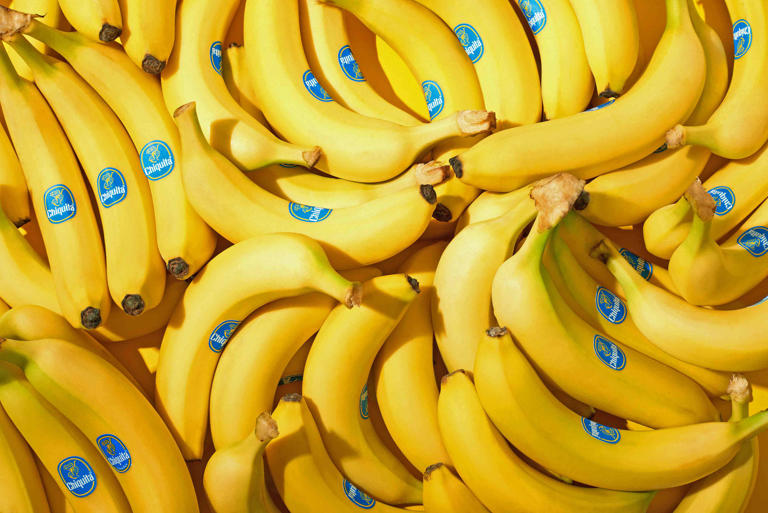
Every American kitchen has them — those bright yellow bananas sitting proudly on the counter, a symbol of health, energy, and simplicity.
But give it two days… and the cheerful bunch turns into a patchy, brown-spotted mess.
You tell yourself you’ll use them for banana bread (again), but deep down, you know you just lost another battle in the banana storage war.
And yet, there’s good news — the people who know bananas better than anyone else, Chiquita, have cracked the code on how to store them the right way.
The truth might just change the way your kitchen looks forever.
The Great American Banana Problem
Let’s start with a confession: Americans love bananas — seriously love them.
They’re the most consumed fruit in the country, with the average American eating around 27 pounds every year.
From school lunchboxes to smoothie bowls, bananas are everywhere. But keeping them fresh? That’s another story.
They brown too fast.
They get mushy.
They attract fruit flies.
And no matter how carefully you pick your bunch at the grocery store, it feels like you only get 24 hours of perfect ripeness before it’s too late.
That’s why Chiquita — the company that’s been growing, studying, and perfecting bananas for over a century — decided to step in and set the record straight.
The Myth of the Countertop Banana
We’ve all seen it: bananas sitting in a fruit bowl, next to apples and oranges, basking in the sun-drenched corner of the kitchen.
It looks beautiful — like something from a magazine spread.
But it’s also the worst place to keep them.
Here’s why:
Bananas release a natural gas called ethylene, which speeds up ripening.
When they sit together in a tight bunch — or worse, with other ethylene-producing fruits like apples — that gas builds up and accelerates the process even more.
Result?
A once-perfect bunch turns spotty, soft, and overripe faster than you can finish your coffee.
The Chiquita Way: The Science of Slow Ripening
According to Chiquita’s experts, the secret to keeping bananas fresh isn’t complicated — it’s scientific.
They’ve studied every stage of a banana’s journey, from harvest to your countertop, and they’ve identified the sweet spot of storage conditions that slow ripening naturally while preserving flavor and nutrients.
Here’s the Chiquita-approved way to store your bananas:
1. Separate the Bananas Immediately
Yes, you read that right.
The first step is to break up the bunch.
Each banana produces ethylene gas — when they’re all clustered together, they trap that gas, ripening each other like a chain reaction.
By separating them, you reduce the gas buildup, slowing the overall ripening process.
Pro tip:
Cut the bunch cleanly at the top (the crown area), and avoid squeezing the stems — that can cause bruising.
2. Wrap the Stems (The “Crown”)
This is the magic trick most people never knew about.
Take a small piece of plastic wrap or aluminum foil and cover the stem area of each banana.
Why?
Because ethylene is mostly released from the stem. Sealing it in slows down the release and keeps your bananas fresher for several extra days.
It’s simple, effective, and works whether you’re storing them on the counter or in the fridge later on.
3. Hang Them (Don’t Let Them Sit on the Counter)
Chiquita experts recommend hanging your bananas on a banana hook or stand.
When bananas sit on a hard surface, pressure builds at the contact points, leading to those annoying brown bruises. Hanging them eliminates that problem completely and allows better airflow — keeping the peel firmer, longer.
It also looks neat and keeps your counter organized (bonus points!).
4. Keep Them Cool — But Not Too Cold
Temperature is a game-changer.
Bananas like it around 55°F–60°F — cool, but not refrigerator-cold.
When stored in the fridge too early, the cold disrupts the enzymes that control ripening, causing the peel to darken — though the inside often stays fine.
So, here’s the rule:
👉 Keep bananas at room temperature until they’re fully yellow.
👉 Once they reach perfect ripeness, move them to the fridge to pause the process.
The peels may darken slightly, but the fruit inside will stay fresh and firm for days.
5. Avoid Mixing with Other Fruits
Apples, pears, peaches — all of these release ethylene gas too.
Keeping bananas near them is like surrounding a slow cooker with jet engines — they’ll overheat (in this case, overripen) fast.
If you want to store multiple fruits, keep bananas separate — ideally in their own hanging stand or designated space.
The Real Reason Bananas Ripen So Quickly
Here’s a bit of science you didn’t ask for but will secretly love.
Bananas are climacteric fruits — meaning they continue to ripen even after they’re picked.
Unlike grapes or berries, which stop changing once harvested, bananas go through an entire chemical transformation post-picking.
When you buy them green, they’re still in their “pre-sugar” stage — the starch slowly converts to sugar over several days.
And guess what fuels that transformation?
Yep — ethylene gas.
That’s why managing it is the single most effective way to extend shelf life.
Bonus Trick: The “Half-Freezer” Method
This one’s for the smoothie lovers across America.
If your bananas are already ripening too fast, don’t toss them — freeze them at their peak.
Here’s how to do it right:
-
Peel the bananas (never freeze them with the peel on).
-
Slice them into chunks or halves.
-
Lay them flat on parchment paper in a freezer-safe container.
-
Once frozen, store them in airtight bags.
They’ll last up to 3 months — perfect for smoothies, baking, or even a healthy ice cream base.
Meet Mark: The Banana Lover Who Finally Got It Right
Mark, a 35-year-old fitness coach from Florida, had a love-hate relationship with bananas.
They were his go-to snack before workouts — portable, quick energy, and full of potassium. But he couldn’t keep them from spoiling.
Every Monday, he’d buy a big bunch, only to watch half of them turn brown by Thursday.
Then one day, he stumbled upon the Chiquita method online.
Skeptical but desperate, he gave it a try:
-
Separated the bunch
-
Wrapped the stems
-
Hung them away from other fruits
-
Moved ripe ones to the fridge
By the next week, he noticed something miraculous: his bananas were lasting longer than his willpower.
Mark’s story is simple, but it’s the kind of real-life win every household in America can relate to.
The Hidden Benefit: Less Waste, More Savings
In the U.S., food waste is a $400 billion problem, with bananas ranking among the top wasted fruits.
Every time a bunch goes brown and ends up in the trash, that’s not just wasted food — it’s wasted money, effort, and energy.
By following Chiquita’s method, households can easily extend the life of a bunch by 3–5 days, reducing waste dramatically.
Imagine if even 10% of American homes started doing that — it would mean millions fewer bananas tossed out every week.
Sometimes, small habits make the biggest difference.
Bananas by the Numbers (Fun Facts Americans Don’t Know)
-
The average U.S. grocery store sells over 25,000 pounds of bananas per year.
-
Bananas are the most affordable fresh fruit in the country — typically under 60¢ each.
-
Each banana provides about 105 calories, rich in potassium, vitamin C, and B6.
-
The iconic Chiquita Blue Sticker first appeared in 1944 — and remains one of the most recognized food symbols in the world.
But behind those fun facts is a simple truth: keeping them fresh makes every one of those numbers count more.
How to Know When It’s Time to Refrigerate
There’s a perfect moment for every banana lover — that sunny yellow shade with just a few freckles.
That’s your cue.
Once your bananas reach that point:
➡️ Move them to the fridge.
If you wait until they’re already soft, refrigeration won’t save them. But if you chill them at just the right time, they’ll stay firm and sweet for nearly a week longer.
What About Banana Bread Bananas?
Okay, let’s be honest — no banana article is complete without this.
Overripe bananas aren’t a disaster — they’re destiny.
When bananas turn brown and soft, their sugar content peaks, making them perfect for baking.
So if you miss the freshness window, don’t panic — bake!
Mash those bananas and freeze the puree for quick banana bread, pancakes, or muffins later.
That’s how smart kitchens waste nothing.
The Chiquita Mindset: Freshness Is a Lifestyle
What Chiquita’s method really teaches us isn’t just how to store bananas — it’s how to think differently about freshness.
We live in a world of speed and waste, but fruit — real, natural fruit — teaches patience.
Bananas remind us to pay attention to timing, environment, and small details that make a big impact.
When you store them right, they reward you — not just with flavor, but with value, nutrition, and less waste.
Your New Banana Routine: Simple Recap
Step 1: Separate each banana from the bunch.
Step 2: Wrap the stems with plastic or foil.
Step 3: Hang them to prevent bruises.
Step 4: Keep them away from other fruits.
Step 5: Move to fridge once yellow and ripe.
Step 6: Freeze extras at their peak.
That’s it.
No special tools, no fancy hacks — just a smarter way to store America’s favorite fruit.
Final Thoughts: It’s Time to Rethink the Banana Bowl
Bananas have been part of American kitchens for generations — a symbol of health, convenience, and comfort.
But for all our love of them, we’ve been storing them wrong this whole time.
Now, thanks to science and a century of expertise, we can finally give bananas the treatment they deserve.
So tomorrow morning, when you reach for that yellow bunch, remember:
Separate, wrap, hang, chill, and enjoy — the Chiquita way.
Because freshness isn’t about luck… it’s about knowing the secret. 🍌
FAQs
Q1: Should I store bananas in the fridge right away?
No — only refrigerate them once they’ve turned yellow and reached your preferred ripeness. Before that, keep them at room temperature.
Q2: Why do banana peels turn black in the fridge?
Cold temperatures affect the peel’s pigments, turning them dark — but the inside fruit remains perfectly fresh and safe to eat.
Q3: Can I store bananas with apples or oranges?
It’s best not to. Those fruits emit ethylene gas, which speeds up banana ripening and spoilage.
Q4: How long do bananas last after using the Chiquita method?
With proper separation, wrapping, and refrigeration, bananas can stay fresh up to 7–9 days longer than usual.
Q5: What’s the best way to freeze bananas for smoothies?
Peel, slice, and freeze them flat on parchment paper before transferring to airtight bags. They’ll last about 3 months.