
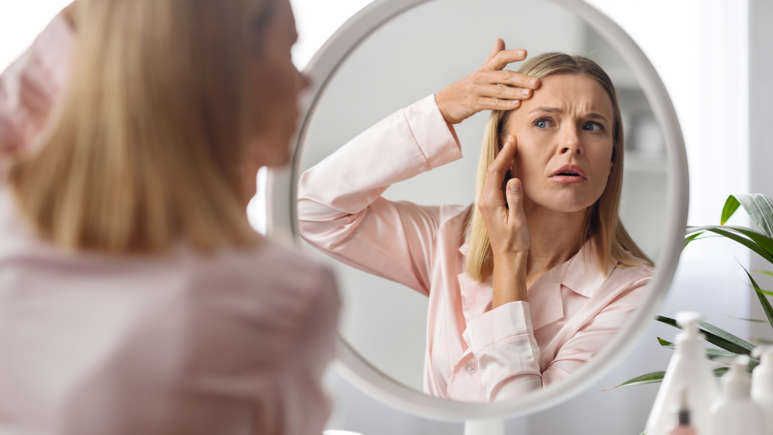
It was at my 20-year high school reunion that I saw her. Not the homecoming queen or the star quarterback, but Sarah Miller. Sarah, who had always been a year ahead of me, who I remembered as vibrant and full of a kind of kinetic energy. We’re all 38, 39 years old now. We’ve lived. We have laugh lines and stories etched on our faces, and that’s a beautiful thing.
But Sarah looked… tired. Not just “I-have-two-kids” tired, but a deeper, systemic weariness. Her posture was slightly stooped, as if carrying an invisible weight. Her skin had a dull, sallow tone, and her eyes, once so bright, seemed to have receded into shadows. She looked, for lack of a kinder word, older than her years. We hugged, made small talk, and later, as I scrolled through the reunion photos, the contrast was startling. It wasn’t genetics; it was something else.
That night, I couldn’t shake the feeling. It sparked a curiosity in me that lasted for months. I began to research, to talk to dermatologists, nutritionists, and sleep specialists. I started looking at my own life, my own habits. And I began to see a pattern. Aging isn’t just a chronological cliff we fall off at a certain birthday. It’s a slow, quiet erosion. And the tools for this erosion aren’t dramatic illnesses or tragic events; they are the small, seemingly insignificant choices we make every single day.
We are quietly, consistently, aging ourselves faster. And we’re doing it with a series of silent saboteurs we’ve welcomed into our lives.
The Saboteurs in Our Midst
Here are the 15 everyday habits that are quietly accelerating the aging process, and how to disarm them.
1. The “Crash Diet” Yo-Yo: The Elasticity Thief
The Story: My friend Mark’s life is a cycle of “January 1sts” and “Summer Bods.” He’ll embark on a brutal, 800-calorie-a-day cleanse, drop 15 pounds, and then, by spring, it’s crept back, plus a little extra. His face tells the tale. With each drastic weight loss, his cheeks hollow, but the skin doesn’t quite snap back. With each regain, it stretches. Over the years, this constant expansion and contraction has stretched his skin’s elasticity like a worn-out rubber band, leading to premature sagging.
The Science: Rapid weight loss doesn’t give your skin time to contract. Furthermore, these diets are often deficient in essential proteins and fats that are the building blocks of collagen and elastin—the very scaffolding that keeps your skin firm. This habit doesn’t just age your body; it ages your face dramatically.
2. The Smartphone Slump: Posture of the Aged
The Story: Look around any coffee shop, any bus stop. You’ll see a sea of people, heads bent forward, shoulders rounded, spines curled into a human question mark. We call it “tech neck,” and it’s silently reshaping our skeletons. This posture chronically strains the muscles of the neck and upper back, leads to tension headaches, and over time, can create a permanent forward hunch—a postural signature we associate with the elderly.
The Science: Consistently looking down increases the gravitational pull on the skin of the neck, contributing to banding and wrinkles. It also compresses the spine and can lead to disc degeneration. Standing tall doesn’t just make you look younger; it keeps your skeletal structure healthier for longer.
3. Sippin’ on Sweetness: The Sugar Crash Within
The Story: Lisa, a colleague, wouldn’t dream of eating a candy bar. But her day is a liquid parade of sweetness: a flavored creamer latte in the morning, a soda with lunch, a sweet tea in the afternoon. She’s constantly sipping on empty calories that are wreaking havoc on a cellular level.
The Science: This is about glycation. Excess sugar in your bloodstream attaches to proteins like collagen and elastin, forming aptly named compounds called AGEs (Advanced Glycation End products). These AGEs make these once-supple proteins stiff, brittle, and unable to do their job. The result? Skin that loses its resilience, leading to wrinkles, sagging, and a loss of radiance. Your morning vanilla latte is quite literally caramelizing your skin from the inside out.
4. The Chronic Clencher: Stress as a Physical Force
The Story: Do you grind your teeth at night? Is your jaw constantly tight? Is the space between your eyebrows permanently furrowed? This was me. I carried my stress in my face. I was a “chronic clencher.” I didn’t realize that my body was constantly braced for impact, even when I was watching TV or trying to relax.
The Science: Chronic stress keeps the hormone cortisol elevated. High cortisol breaks down collagen, impairs skin’s ability to repair itself, and can even lead to weight gain around the abdomen. The physical act of frowning and clenching, over thousands of repetitions, eties those lines permanently onto your face, creating what are aptly called “worry lines” and “the 11s” between your eyebrows.
5. The “I’ll Sleep When I’m Dead” Mentality
The Story: We wear sleep deprivation like a badge of honor in the USA. “I only got four hours last night,” we boast, as if it proves our productivity. But your body isn’t fooled. While you sleep, it performs critical maintenance: flushing toxins from the brain, repairing muscle tissue, and producing human growth hormone, which is crucial for cell repair and renewal. Skimp on sleep, and you skip the repair shift.
The Science: Just one night of poor sleep can lead to puffy eyes, pale skin, and dark circles. Chronic sleep deprivation leads to a dull complexion, fine lines, and a weakened immune system. “Beauty sleep” is not a myth; it’s a non-negotiable biological process for youthfulness.
6. Dehydration by Default
The Story: You feel thirsty? You’re already dehydrated. Many of us live in a perpetually mildly dehydrated state, fueled by coffee (a diuretic) and not enough water. We mistake thirst for hunger, reach for a snack, and continue the cycle.
The Science: Your skin is your body’s largest organ, and it’s about 64% water. When you’re dehydrated, your skin becomes dry, flaky, and more prone to wrinkling. Think of a plump, juicy grape compared to a shriveled raisin. Dehydration is the process of turning your skin from a grape into a raisin.
7. The One-Trick Pony: Neglecting Strength Training
The Story: My mom, in her 60s, walks every day. It’s fantastic for her heart. But she never lifts anything heavier than her grocery bags. As a result, she’s lost significant muscle mass—a condition called sarcopenia. This loss of muscle is a primary driver of frailty in older age. It slows your metabolism, weakens your bones, and makes you more susceptible to falls.
The Science: After age 30, we naturally lose 3-5% of muscle mass per decade. Strength training is the only way to combat this. Muscle is metabolically active tissue that burns calories at rest and provides the structural strength that keeps you upright, powerful, and young in your movement.
8. Sun-Kissed, But at What Cost?
The Story: Growing up in the 90s, baby oil and iodine were our tools for the “perfect tan.” We baked. Now, in our 40s, the friends who lived on those beach towels are the ones seeing dermatologists most frequently for pre-cancerous spots and have skin that resembles a well-worn leather handbag.
The Science: Photoaging—aging caused by sun exposure—is responsible for up to 90% of visible skin aging. UV rays shatter collagen and elastin fibers and cause hyperpigmentation. Wearing a daily broad-spectrum SPF of 30 or higher is the single most effective, scientifically-proven anti-aging product in existence. Full stop.
9. The Inactivity of Convenience
The Story: We have evolved to move. Yet modern American life is engineered for stillness. We drive to work, sit at a desk, drive home, and sit on the couch. This sedentary lifestyle is a slow poison. It slows circulation, contributing to that dull skin I saw at the reunion. It compromises posture and leads to stiff, achy joints.
The Science: Regular movement pumps oxygen-rich blood to all your cells, including your skin cells, giving you a healthy glow. It keeps your joints lubricated and your muscles engaged. A body in motion, stays in motion—and stays younger.
10. The Processed Food Pipeline
The Story: The standard American diet (SAD is a fitting acronym) is a pipeline of packaged, processed foods high in sodium, sugar, unhealthy fats, and chemical preservatives. These foods create inflammation throughout the body.
The Science: Chronic, systemic inflammation is now understood to be at the root of almost every age-related disease, from arthritis to heart disease. It also manifests on your skin as redness, puffiness, and can exacerbate conditions like acne and rosacea. You are not just what you eat; you look like what you eat.
11. The Solo Life: The Aging Power of Loneliness
The Story: The U.S. is experiencing a loneliness epidemic, and it’s a potent ager. My neighbor, a widower, used to be vibrant. Since his wife passed, he’s withdrawn. His world has shrunk, and he seems to have aged a decade in two years. Laughter is rare, conversation is minimal.
The Science: Loneliness and social isolation are linked to increased risk of dementia, heart disease, and stroke. Meaningful social connections lower stress, boost mood, and provide a sense of purpose. A life without rich social ties is a life that ages faster, from the brain outward.
12. The Blast of Hot Water
The Story: There’s nothing like a long, scalding hot shower to unwind, right? Wrong. That steam, while feeling great, is stripping your skin and scalp of their natural, protective oils.
The Science: This leads to chronic dryness, itchiness, and eczema. Dry skin is more vulnerable to irritation and shows fine lines more prominently. Switching to lukewarm water is a simple act of kindness to your body’s largest organ.
13. The Neglected Smile
The Story: We think of a bright smile as cosmetic, but oral health is a window to your overall health. Gum disease (periodontitis) is linked to inflammation that can affect your entire body, including your heart.
The Science: Neglecting your gums and teeth doesn’t just lead to yellowing or loss of teeth (which dramatically ages a person’s appearance). The chronic inflammation from gum disease can circulate throughout your body, accelerating systemic aging.
14. The “Go-Go-Go” Without a Breath
The Story: We live in a state of constant, low-grade panic. Notifications, deadlines, traffic. We never truly turn off. We don’t pause to just breathe. This constant state of sympathetic nervous system activation (“fight or flight”) keeps cortisol high and never allows our body to enter the restorative “rest and digest” state.
The Science: Chronic stress, as mentioned, is a collagen-killer. Taking just five minutes a day to sit in silence, focus on your breath, or practice mindfulness can lower your blood pressure, reduce cortisol, and signal to your body that it’s safe to rest and repair.
15. The Complacency Trap
The Story: The most insidious saboteur is the belief that “this is just how it is.” That it’s too late to build muscle, that your posture is set in stone, that you’re too busy to cook or sleep. This mindset, more than any single habit, guarantees a faster decline.
The Science: Neuroplasticity—your brain’s ability to form new neural connections—lasts a lifetime. Your muscles can be built at any age. Your skin can improve with better care. The body has a remarkable ability to heal when given the right tools. Giving up on change is the final surrender to accelerated aging.
The Turning Point
Seeing Sarah was my wake-up call. It wasn’t about vanity; it was about vitality. It was about ensuring that my years are not just numerous, but full of energy, strength, and joy. I’ve since incorporated strength training, prioritized sleep, and become vigilant about sunscreen. I drink water like it’s my job and try to be mindful of my posture.
The silent saboteurs are still there, of course. But now I see them. And by seeing them, I can choose to disarm them, one habit, one day at a time. The goal isn’t to look 20 at 50. It’s to feel alive, strong, and fully yourself at every age. And that is a victory worth fighting for.
Frequently Asked Questions (FAQs)
Q1: I’m in my 50s. Is it too late to reverse the damage from these habits?
It is absolutely not too late. While you can’t erase all damage, the human body is incredibly resilient. Quitting smoking, starting a strength training regimen, improving your diet, and wearing sunscreen can yield visible and functional improvements at any age. The best time to plant a tree was 20 years ago; the second-best time is today.
Q2: What’s the single most important habit I should change first?
If you have to pick one, make it daily sunscreen. It’s the most direct defense against the primary cause of external skin aging. A very close second is prioritizing consistent, quality sleep, as it affects virtually every system in your body.
Q3: I’m so stressed. I don’t have time to meal prep or go to the gym for an hour. What can I do?
Think small, not all-or-nothing.
-
Nutrition: Keep it simple. A rotisserie chicken from the grocery store and a bag of pre-washed salad is a healthy meal in minutes. Swap one soda a day for sparkling water.
-
Fitness: You don’t need an hour. A 15-minute bodyweight workout (squats, push-ups, planks) at home is effective. Park farther away. Take the stairs.
-
Stress: Try a 5-minute meditation app in the morning or before bed. These micro-habits, done consistently, compound into massive change.
Q4: Are there any specific foods that are anti-aging?
Focus on an “anti-inflammatory” diet rich in:
-
Antioxidants: Colorful berries, dark leafy greens, dark chocolate.
-
Healthy Fats: Avocado, nuts, olive oil, fatty fish (like salmon) which are high in Omega-3s.
-
Lean Protein: Chicken, fish, tofu, legumes, which are essential for muscle and collagen repair.
Q5: I get 8 hours of sleep but still wake up tired. What gives?
It’s not just quantity; it’s quality. This could be a sign of sleep apnea, which is surprisingly common and prevents you from reaching restorative deep sleep stages. Other culprits include drinking alcohol too close to bedtime (it disrupts sleep cycles), blue light from screens, or an inconsistent sleep schedule. It’s worth discussing with your doctor.