
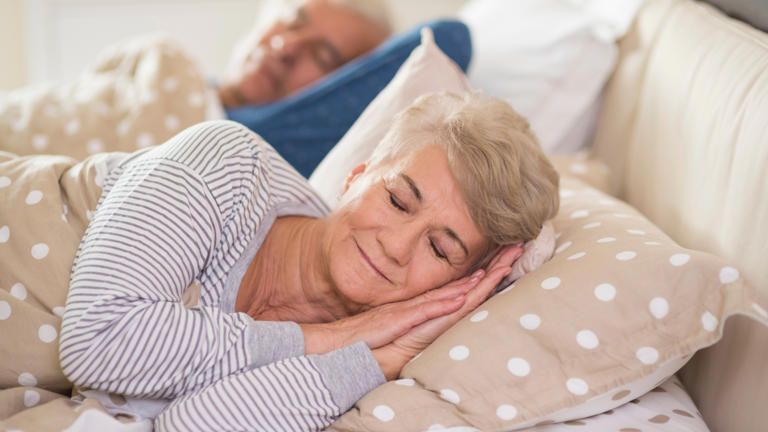
I still remember the night I first realized something had quietly changed. I was 50, living in a Midwest suburb, and thought I’d simply become busier, heavier, more tired. But that night, after a long day of errands and chores, I tucked myself into bed—and yet lay awake, tossing, turning, staring at the ceiling light until 2 a.m. The silence felt heavier. When sleep finally came, it fled before dawn, leaving behind a sense of restlessness I had never known before.
That wasn’t mere aging, I would later discover — it was a confluence of physiological shifts, life changes, and nighttime battles that many Americans face but seldom name. Sleep becomes more complicated with age, and not just because “younger you had more energy.” It’s a gradual reweaving of how your mind, body, and environment interact at night.
Over time, I came to think of it as an unfolding story: of hormones that dim, clocks that drift, diseases that intrude, and behaviors that unintentionally sabotage rest. Let me walk you through that story — the why, the how, and (most important) the what-you-can-do — in a tone that feels like turning pages rather than reading a lab report.
Chapter 1: The Fading Deep Sleep — Your Brain’s Quiet Rebellion
Long before I knew the term “sleep architecture,” I felt its absence. I would nod off, only to awaken at odd hours, feeling as though I’d gap-skipped entire nights.
As we age, one of the most consistent changes is a reduction in slow-wave sleep (also called deep or non-REM stage 3). Research confirms that older adults spend less time in restorative deep sleep. BioMed Central+2PMC+2 Deep sleep is when our body does much of its repair work: clearing metabolic waste, consolidating memory, regulating growth signals. When deep sleep thins, you lose some of that “healing magic.”
At the same time, light sleep (NREM stages 1 and 2) becomes more prominent. You may drift in and out of semi-wakefulness, more susceptible to noise or body shifts. BioMed Central+2PMC+2 Also, REM sleep, which nurtures emotional processing and dreaming, tends to shrink as well. PMC+2BioMed Central+2
In my restless early-50s nights, I now understand: I wasn’t broken; I was being shifted. My brain was gradually handing over its nocturnal vigor to daytime alertness — and losing some of the strength to sustain deep rest.
Chapter 2: The Clock Shifts — When Your Internal Time Drifts
If you once joked that your internal clock was “set to college time,” in midlife you might find it rewired to “evening closing.” That effect has a name: phase advance.
With aging, many people experience an earlier circadian rhythm — meaning you might feel sleepy earlier in the evening and wake earlier in the morning. MedlinePlus+4BioMed Central+4PMC+4 That shift is compounded by a gradual weakening of the circadian signal — your internal “day-night switch” operates less robustly, making it harder for your body to enforce a clean divide between wake and sleep.
Melatonin, the hormone that signals “night,” also declines in both amplitude and regularity. ScienceDirect+3BioMed Central+3PMC+3 With a softer melatonin surge, your brain gets a quieter nudge toward sleep — more easily overridden by light, stress, or noise.
In my case, I’d be yawning at 8 p.m., sliding into bed around 9, only to lie awake waiting for true drowsiness. By 4 a.m., I’d blink awake, the sky not yet light but my body convinced the night was done.
Chapter 3: The Body Speaks — Health, Medications & Nighttime Interruptions
Aging doesn’t just alter your brain and clock; it also layers your nights with external influences.
Chronic conditions and physical pain
Arthritis, back pain, acid reflux, restless legs — these are more common as we age, and they can fragment sleep by jolting you awake or making repositioning uncomfortable. ScienceDirect+3BioMed Central+3Greenbrook Medical+3
Nocturia (needing to urinate during the night) becomes more frequent, too, interrupting sleep cycles. MedlinePlus+2BioMed Central+2
Medication side effects
Many medications commonly used in midlife and later — blood pressure meds, antidepressants, steroids, stimulants — may either stimulate the nervous system, cause bathroom urges, or interfere with sleep architecture. BioMed Central+1
Sleep disorders become more frequent
-
Sleep apnea gains prevalence. In older adults, obstructive sleep apnea (OSA) is much more common and often underdiagnosed. Greenbrook Medical+3BioMed Central+3PMC+3
-
Insomnia disorders — difficulty initiating or maintaining sleep — occur more often in older adults (especially when health, mood, or medications intervene). BioMed Central+2PMC+2
-
Restless Legs Syndrome (RLS) or periodic limb movement disorder can jolt you awake in micro-arousals without full awareness. Greenbrook Medical+1
-
Circadian disorders like Advanced Sleep-Wake Phase Disorder (you fall asleep too early, wake too early) are more common in later life. BioMed Central+2PMC+2
So in my story, some nights weren’t merely fragile — they were invaded by underlying conditions that needed attention, not just better sleep techniques.
Chapter 4: The Perception Shift — Why “I’m Sleeping Worse” Feels So Real
I once asked a sleep specialist: “What irritates me most is that my sleep feels awful — but the data sometimes shows I’m not losing as many hours as I believe.” She smiled: “That’s your perception changing.”
Because sleep becomes lighter, we become more consciously aware of awakenings. In youth, we might sleep through minor shifts; later on, we become semi-aware of subtle arousals, making the night feel fragmented. MedlinePlus+2BioMed Central+2
As transitions between wake and sleep become more abrupt, we are more prone to wake up fully instead of slipping seamlessly back into slumber. MedlinePlus+2BioMed Central+2
Additionally, mood and anxiety — which may increase over time due to life stresses, health worries, or isolation — amplify perceived sleep quality, even if objective measures don’t change much.
So many nights I lay awake thinking I’d gotten no rest — only to measure 6.5–7 hours of fragmented sleep. But that perception, that feeling of broken rest, became a reality, too.
Chapter 5: The Compounding Effect — How One Night Influences the Next
In youth, if you had one bad night, you recovered. Over time, one poor night can cascade. When sleep is already tenuous:
-
Sleep debt accumulates more easily.
-
Daytime napping becomes more tempting, but naps can reduce sleep drive at night.
-
Anxiety about sleep (“Will tonight be worse?”) becomes self-fulfilling, rousing stress hormones.
-
Lifestyle shifts — less physical activity, more screen time in evenings, irregular routines — may creep in and destabilize your internal rhythm.
Thus, the puzzle becomes harder: you’re playing against both your biology and your daily habits.
Chapter 6: Stories From Real Sleepers (Voices You Might Recognize)
-
“I used to sleep like a rock. Now after 11 p.m. I’m watching old sitcoms just to knock me out.” That’s Sarah, 58, in Colorado, with no overt illness yet a persistent inability to drop into deep sleep.
-
“Even when I get a full eight hours, I wake up groggy and foggy.” That’s Tom, 65, retired and active, whose sleep architecture now gives him “shallow rest.”
-
“I’ve taken to yoga and early walks, but still the night teases me — I wake at 3 a.m. like clockwork.” That’s Janet, 62, intuitive and health-conscious, battling her shifting melatonin and circadian drift.
These are not isolated voices—they echo in thousands of sleep studies and clinics across the U.S.
Chapter 7: What You Can Do — Tactics to Reclaim Rest
The reassuring news: the “complication” is not unsolvable. While you can’t freeze time, you can tilt the odds back in your favor.
1. Anchor Your Rhythm: Sleep Consistency
Go to bed and wake at the same times every day, even on weekends. This strengthens your internal clock. BioMed Central+3Greenbrook Medical+3MedlinePlus+3
If you’ve shifted early (phase advance), avoid early evening napping and let mild evening fatigue pass without hitting the pillow too early.
2. Light Exposure: Your Clock’s Fuel
Get bright light (sunlight or full-spectrum light indoors) in the early morning. That reinforces daytime signals.
After dusk, limit blue/bright screens (phones, tablets, TVs) and use warmer lighting. Consider dimmers or amber-tinted filters.
3. Use the Bedroom Mostly for Sleep
Don’t let your bed become a hiking spot, office, or TV cave. Train your brain to link bed = sleep. If you can’t sleep within 20 minutes, get up, do a calming activity, then return. MedlinePlus+2BioMed Central+2
4. Be Smart About Napping
A light nap (20–30 minutes) early afternoon can refresh you — but avoid long, late-day naps that suppress sleep drive later. MedlinePlus+1
5. Mindful Movement
Regular physical activity (walking, cycling, yoga) helps consolidate sleep. But avoid vigorous exercise too close to bedtime (within 2–3 hours). MedlinePlus+2BioMed Central+2
6. Watch Your Evening Food & Drink
Avoid caffeine after mid- to late-afternoon. Limit heavy or spicy foods that may cause reflux. Moderate alcohol: though it may induce sleepiness, it fragments deep sleep later in the night. MedlinePlus+1
7. Temperature & Comfort
Keep your bedroom cool (around 60–67 °F / 15–19 °C). Use breathable bedding. Avoid heat or thick duvets that trap body heat. Some studies suggest older adults are more sensitive to ambient temperature.
8. Treat Underlying Causes
-
Screen for sleep apnea (snoring, gasping, daytime fatigue).
-
Seek help for pain, RLS, depression, bladder issues.
-
Review medications with your physician: adjust timing or types that disrupt sleep.
-
Cognitive Behavioral Therapy for Insomnia (CBT-I) is evidence-based and effective in older adults. BioMed Central+1
9. Embrace Sleep-Friendly Habits
-
Wind down with relaxing rituals: reading, stretching, meditation.
-
Use blackout curtains to block external light.
-
Reduce noise: white noise machines or earplugs.
-
Keep the bedroom dark, calm, and reserved for rest.
In my own journey, I adopted a nightly ritual: warm foot bath, lavender diffuser, soft reading light. I aligned bedtimes within a 7-minute window nightly. Over months, the rough edges smoothed; the night became less of a battlefield.
Epilogue: Aging, Adapted, but Not Surrendered
As I write this, I’m older than the version who watched the ceiling at 2 a.m. But I don’t see sleep as something lost — more like a conversation that has shifted its tone. The deeper, seamless slumber of youth may fade, but a steadier, more intentional rest becomes possible if you listen to your body, respect its rhythms, and adapt.
We often think aging steals — but sometimes, it quietly nudges us toward greater self-care and insight. Sleep doesn’t have to become enemy territory; it can remain your ally, albeit a more delicate one.
Frequently Asked Questions (U.S.-Focused)
Q. Do older adults need less sleep, or just get less?
A. Research is mixed. Some studies suggest sleep need modestly declines; others indicate need remains similar (e.g. ~7–8 hours) but fragmentation and efficiency worsen. PMC+2BioMed Central+2
Q. Is it normal to wake 3 to 4 times a night after age 60?
A. Many older adults do experience multiple awakenings due to lighter sleep, health conditions, or bathroom trips. ScienceDirect+3MedlinePlus+3BioMed Central+3 But frequent, prolonged awakenings that impair daytime function deserve evaluation.
Q. When should I see a doctor about my sleep?
A. If there’s loud snoring or gasping (possible sleep apnea), persistent insomnia (3+ months), excessive daytime sleepiness, or signs of cognitive decline or mood changes. Also when medications or medical conditions might be contributing.
Q. Can melatonin help older adults sleep?
A. Melatonin levels decline with age, so supplementation sometimes helps with sleep onset. But results vary, and long-term use should be discussed with a physician. MedlinePlus+2BioMed Central+2
Q. Is it okay to use sleep medications at my age?
A. Caution is warranted. Older adults metabolize drugs more slowly, increasing risks of delirium, falls, or next-day drowsiness. Medications should be a short-term bridge, ideally paired with behavioral strategies. MedlinePlus+2BioMed Central+2
Q. What’s the role of CBT-I (Cognitive Behavioral Therapy for Insomnia)?
A. It’s considered first-line for chronic insomnia, effective even in older populations. It addresses behaviors and thoughts that perpetuate sleep difficulties. BioMed Central+1
Q. Can I really “train” my circadian rhythm with light and routine?
A. Yes — consistent sleep times and exposure to morning light can strengthen internal signals. Over weeks to months, your brain can relearn better timing cues.